
Discover how wood coating resin helps create scratch-resistant wood finishes with excellent durability, smooth appearance, and reliable performance for furniture and interior applications.
Wood Coating Resin: Building Tougher Wood Finishes
Wood surfaces add warmth, style, and character to homes, offices, hotels, and commercial spaces. However, daily use can leave marks, scratches, stains, and dull patches on the surface. Therefore, the right coating system is essential to protect wood while maintaining its natural appearance.
Wood coating resin forms the foundation of many modern protective coating systems. It helps create a strong film over the wooden surface while supporting properties such as hardness, adhesion, gloss, and chemical resistance. As a result, manufacturers can develop finishes that look attractive and withstand regular use.
Why Wood Coating Resin Matters for Scratch Resistance?
A wood finish needs more than a good appearance. It must also resist the small impacts and friction that occur during everyday use. Furniture, doors, cabinets, flooring, and decorative panels can face repeated contact with objects, cleaning products, and moisture.
A well-designed wood coating resin can improve the mechanical strength of the coating film. Consequently, the finished surface can better withstand scuffing and surface scratches.
Moreover, resin selection affects how the coating behaves during application and curing. A suitable resin can provide a balanced combination of hardness and flexibility. This balance is important because an extremely hard film may become brittle, while a softer film may mark easily.
Key Benefits of Wood Coating Resin
1. Improved Scratch Resistance
Scratch resistance is a key requirement for furniture and interior wood coatings. A properly formulated resin system can create a durable film that helps protect the surface from everyday wear. Therefore, the coating remains attractive for longer, even in areas that receive frequent handling.
2. Smooth and Attractive Surface Finish
Appearance is just as important as protection. Wood coatings should provide a smooth, even surface with the desired level of gloss or sheen.
Wood coating resin contributes to film formation and surface quality. As a result, manufacturers can develop finishes that enhance the natural look of wood while providing a refined appearance.
3. Strong Adhesion
A coating must remain firmly attached to the substrate. Poor adhesion can lead to peeling, cracking, or premature coating failure. For this reason, resin selection should consider the type of wood, surface preparation, application method, and final-use conditions. Good adhesion helps the coating maintain its protective role over time.
4. Resistance to Chemicals and Stains
Wood furniture and panels may come into contact with water, cleaning agents, food, oils, and other substances. A durable coating can reduce the risk of staining and surface damage.
In addition, improved chemical resistance can make coated wood easier to maintain, particularly in commercial and high-use environments.
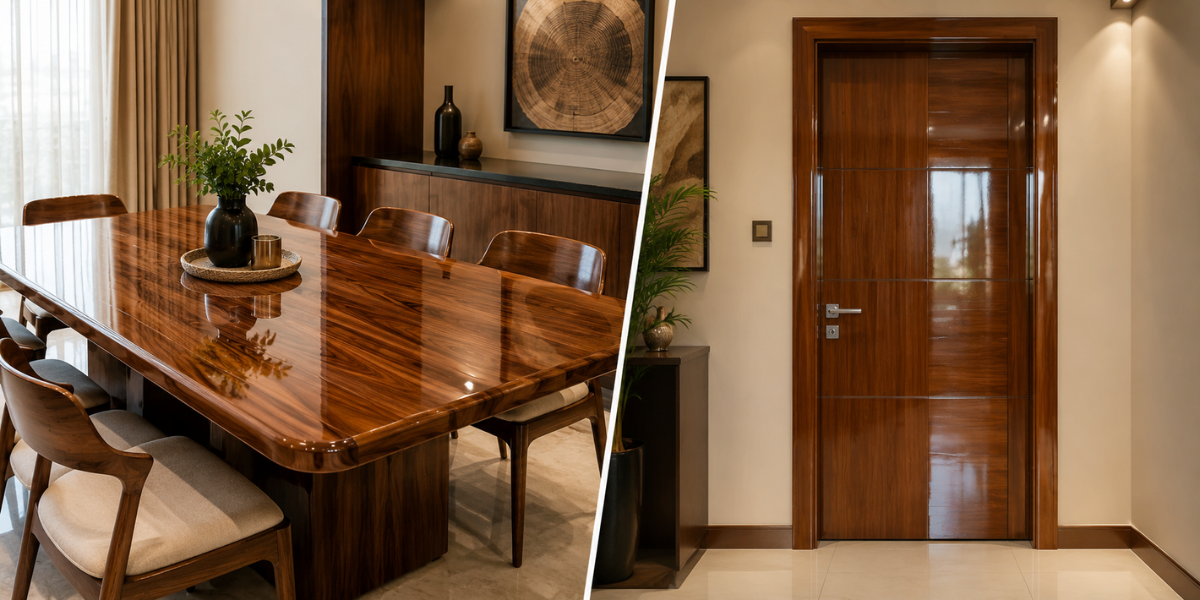
Applications of Wood Coating Resin
Wood coating resin can be used in several decorative and protective coating systems. Common applications include:
- Furniture and wooden tables
- Kitchen cabinets and wardrobes
- Interior doors
- Wooden flooring
- Decorative wall panels
- Office furniture
- Wooden windows and frames
- Hospitality and commercial interiors
Each application has different performance requirements. For example, flooring may need higher abrasion resistance, while premium furniture may place greater emphasis on clarity, smoothness, and appearance.
Formulation Factors for Durable Wood Coatings
- Although resin is a major component, overall coating performance depends on the complete formulation. Therefore, formulators should consider additives, pigments, solvents or water, curing agents, and application conditions.
- Surface preparation also plays an important role. Dust, oil, moisture, or poor sanding can affect adhesion and final appearance. Similarly, correct curing conditions help the coating achieve its intended hardness and durability.
- Furthermore, the coating should be selected according to the end-use environment. Indoor furniture, exterior wood, and high-traffic flooring may require different resin and formulation approaches.
Choosing the Right Wood Coating Resin
The right wood coating resin should offer a practical balance between appearance, protection, processing, and cost. Manufacturers should evaluate properties such as:
- Scratch and abrasion resistance
- Surface hardness
- Adhesion
- Gloss and clarity
- Chemical resistance
- Drying and curing behavior
- Flexibility
- Application compatibility
By considering these factors together, coating manufacturers can create finishes that provide both visual appeal and long-term surface protection.
Concluding Thoughts
Modern wood surfaces need finishes that can withstand everyday use without compromising their appearance. Wood coating resin plays an important role in achieving this balance by supporting scratch resistance, adhesion, surface quality, and durability.
Ultimately, the best results come from matching the resin with the substrate, application process, and performance requirements. With the right formulation approach, manufacturers can develop wood finishes that stay smooth, attractive, and durable for longer.
COMPANY INFO
Website: www.crestresins.com
Phone: +91 9879233188
Email: enquiry@crestresins.com
Address: 605/A, 6th Floor, Tower D, Times Square Grand Office, Sindhubhavan Marg, Near Taj Hotel, Ahmedabad, Gujarat - 380059
