How does the use of resin enhance the durability and performance of coatings and composites? Let’s learn more and explore the key properties, benefits, and industrial applications that drive long-lasting material protection.
Understanding the Use of Resin
Resins play a vital role in modern manufacturing. They help protect surfaces, strengthen materials, and improve product performance. From industrial coatings to advanced composite structures, the use of resin supports many industries that need reliable and long-lasting materials.
Resins are available in different types, each designed for specific needs. For example, polyester resin is widely used in composite manufacturing, while vinyl ester resin offers strong chemical resistance. Similarly, specialty coating resins help improve surface protection, appearance, and durability. Therefore, selecting the right resin is essential for achieving the desired results.
Key Properties That Define the Use of Resin
The use of resin depends on its chemical structure, curing process, and intended application. Each type offers a different balance of performance, processability, and cost.
1. Chemical Resistance
Chemical resistance is important in demanding industrial environments. Certain resins can withstand exposure to acids, alkalis, solvents, and other aggressive substances. As a result, they are suitable for chemical storage tanks, industrial pipes, scrubbers, and protective coatings.
Vinyl ester resin is often selected for applications that require a strong balance of chemical resistance and mechanical performance.
2. Adhesion and Surface Protection
Resins help coatings bond to substrates such as metal, wood, and other prepared surfaces. Good adhesion supports a durable coating system and reduces the risk of peeling or premature failure.
Moreover, suitable coating resins can improve resistance to moisture, abrasion, and weathering. Consequently, they help extend the service life of coated products.
3. Mechanical Strength
Mechanical strength is another important factor in composite manufacturing. When combined with reinforcing materials such as glass fibre, suitable resins form strong and lightweight structures.
For instance, polyester and vinyl ester resins are used in fibre-reinforced plastic (FRP) products. These include gratings, panels, cable trays, pipes, and structural components.
4. Thermal and Weather Resistance
Some resin systems are designed to withstand elevated temperatures and changing environmental conditions. Depending on their formulation, they can support applications exposed to heat, sunlight, humidity, and outdoor weather.
However, the final performance depends on the resin chemistry, additives, curing conditions, and complete coating or composite system.
Use of Resin in Coatings and Composites
The use of resin offers several benefits across industrial applications. Nevertheless, the right formulation must be selected to meet the specific requirements of each project.
- Improved durability: Suitable resin systems help protect surfaces and components against wear, moisture, and environmental exposure.
- Corrosion protection: Protective coatings can reduce the impact of corrosive conditions when the complete system is correctly designed and applied.
- Lightweight construction: Fibre-reinforced composites can deliver useful strength without the weight of many traditional materials.
- Design flexibility: Resin systems can be formulated for different colours, finishes, curing methods, and manufacturing processes.
- Long-term performance: Proper material selection, surface preparation, and application can help reduce maintenance needs and extend service life.
Furthermore, resin-based solutions support efficient manufacturing across sectors such as construction, transportation, energy, and chemical processing.
Major Use of Resin in Coatings and Composites
1. Industrial Protective Coatings
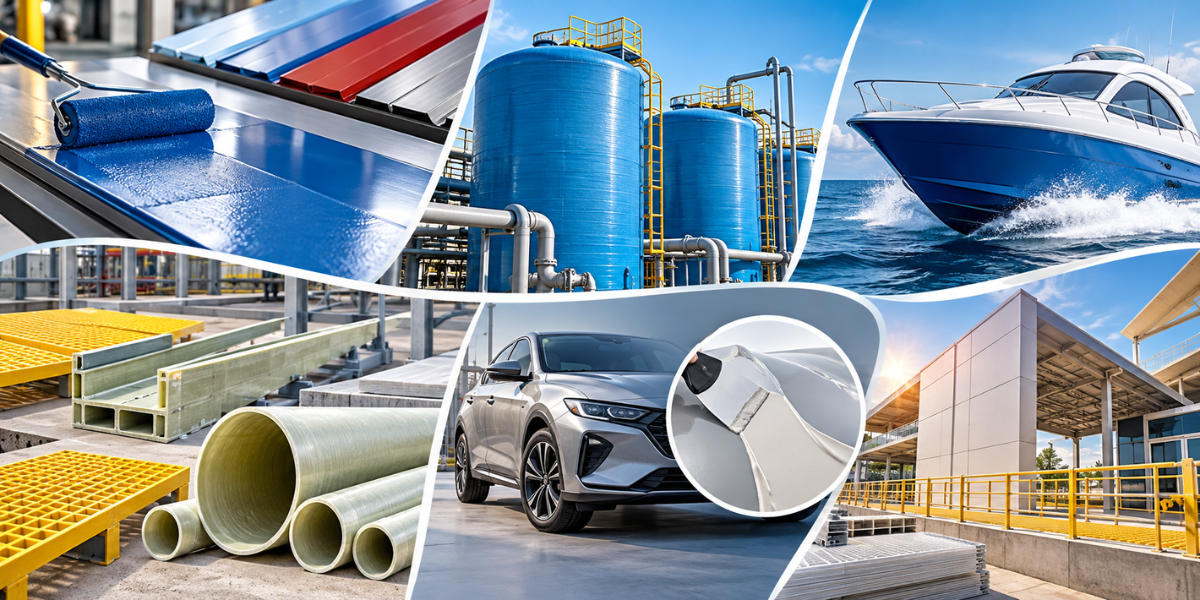
Resin-based coatings are used to protect metal structures, machinery, industrial equipment, and storage facilities. Depending on the formulation, they can provide chemical resistance, corrosion protection, heat resistance, or a decorative finish.
For example, specialty polyester resins are used in coil coating systems for metal roofing, cladding, and industrial panels. These coatings help maintain surface appearance while protecting the underlying metal.
2. FRP Tanks, Pipes, and Gratings
In composite manufacturing, resin binds reinforcing fibres and transfers loads through the structure. As a result, FRP products can offer a useful combination of strength, low weight, and corrosion resistance.
Vinyl ester and unsaturated polyester resins are commonly used in tanks, pipes, gratings, and panels. The appropriate grade depends on the operating environment, mechanical loads, and chemical exposure.
3. Marine and Offshore Structures
Marine environments expose materials to moisture, salt, and demanding service conditions. Therefore, resin systems are selected carefully for boat hulls, marine components, and other composite structures.
When paired with suitable reinforcement and protective layers, these systems can support durability and reliable performance in marine applications.
4. Automotive and Transportation
Resins are also used in automotive putty, composite body components, and protective coating systems. In addition, lightweight composite materials can help manufacturers meet weight and design requirements.
The final choice depends on factors such as surface finish, curing time, temperature resistance, and compatibility with other materials.
5. Construction and Infrastructure
Resin-based materials are used in FRP rebars, structural panels, cable trays, and industrial gratings. These products can offer corrosion resistance and design flexibility, making them useful in selected infrastructure projects. However, structural suitability must be verified against relevant engineering standards and project specifications.
How to Select the Right Resin for Your Application?
Choosing the right resin starts with understanding the application. First, identify the operating temperature, chemical exposure, mechanical loads, and expected service life. Next, consider the manufacturing process, curing requirements, and substrate compatibility.
Additionally, review technical data sheets and test results before finalising the material. Working with an experienced resin manufacturer can also help you identify a suitable formulation for your production needs.
Concluding Thoughts
The use of resin in coatings and composites supports modern industries by improving surface protection, structural performance, and material versatility. From industrial coatings and FRP tanks to marine components and infrastructure products, resin systems serve a wide range of applications.
Ultimately, the right resin depends on the required properties and operating conditions. By selecting an appropriate formulation and following recommended processing methods, manufacturers can achieve reliable performance and build stronger, more durable products.
COMPANY INFO
Website: www.crestresins.com
Phone: +91 9879233188
Email: enquiry@crestresins.com
Address: 605/A, 6th Floor, Tower D, Times Square Grand Office, Sindhubhavan Marg, Near Taj Hotel, Ahmedabad, Gujarat - 380059
