
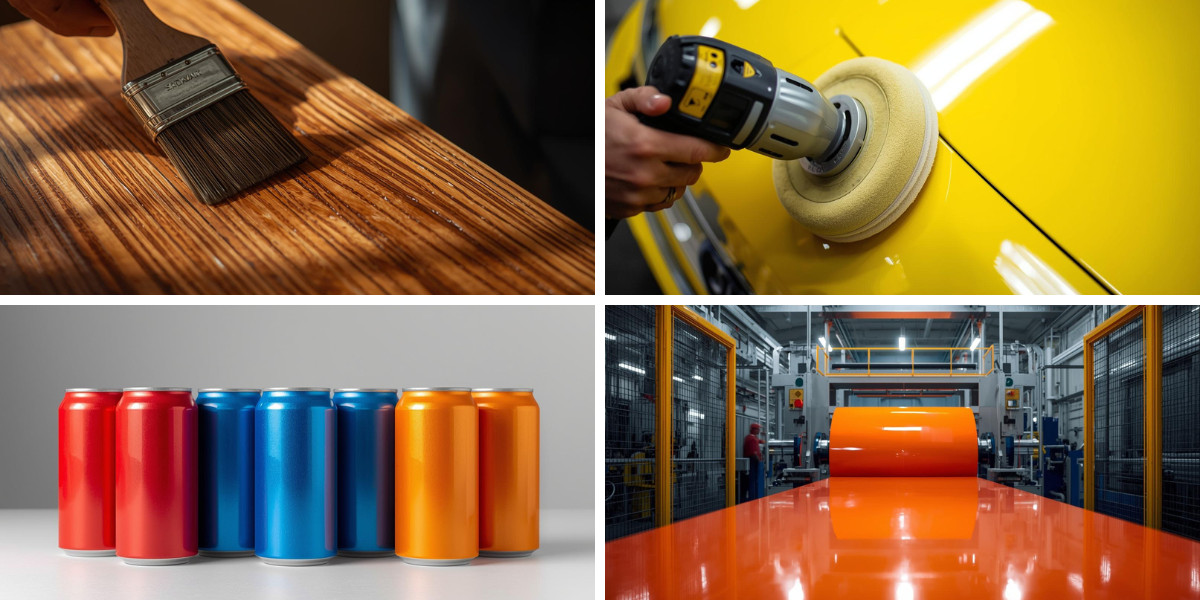
Coating Resins play a vital role in industrial finishes because they form the backbone of protective coating systems used across multiple sectors. Industries demand surfaces that last longer while performing reliably under stress; therefore, advanced resin technologies are widely applied. These resins bind pigments and functional additives together while simultaneously forming a continuous protective film over substrates. As a result, surfaces remain shielded from environmental damage and mechanical wear for extended periods.
Industrial environments are often harsh since equipment is regularly exposed to moisture, chemicals, pressure, and heat. However, coating science has evolved significantly over the years, and modern resin formulations are engineered specifically to handle such challenges. Because of this progress, Coating Resins are now considered essential materials in industrial protection strategies.
How Coating Resins Enhance Surface Durability?
Durability is a primary requirement in industrial applications, and Coating Resins deliver this benefit by creating a dense and uniform protective barrier over the substrate. This barrier shields metal, concrete, or plastic surfaces from corrosion, abrasion, and environmental attack. Consequently, equipment life is extended while maintenance frequency is reduced.
Strong adhesion further enhances durability because the resin bonds tightly to the surface during curing. Once hardened, a tough and cohesive film is formed, which resists peeling, cracking, and blistering under stress. In many cases, premature coating failures are prevented through proper resin selection and formulation.
Moreover, impact resistance is improved since resin-based coatings distribute mechanical stress across the coated surface. Therefore, machinery parts remain intact even when subjected to repeated use or heavy loads. Over time, structural stability is maintained, and repair costs are minimized.
Performance Advantages of Coating Resins
Industrial coatings must perform consistently under demanding conditions, and Coating Resins support this requirement by improving multiple performance properties at once. First, chemical resistance is enhanced, which allows coated equipment to withstand exposure to acids, solvents, oils, and cleaning agents. As a result, operational safety is improved in aggressive environments.
Second, temperature stability is supported because many resin systems are designed to tolerate both high heat and low temperatures without losing integrity. Thus, coatings remain stable despite seasonal or operational fluctuations. Third, weather resistance is strengthened, so outdoor assets remain protected from UV radiation and humidity.
In addition, gloss retention and color stability are maintained over long periods, which ensures that surfaces remain visually consistent while performing effectively. Because of these combined benefits, Coating Resins are widely trusted across manufacturing, infrastructure, marine, and energy industries.
Types of Coating Resins Used in Industry
Different industrial applications require tailored solutions, and several types of Coating Resins are commonly selected based on performance needs. Epoxy resins provide excellent adhesion and chemical resistance; therefore, they are widely used in industrial flooring, tanks, and machinery coatings. Polyurethane resins offer flexibility along with abrasion resistance, so they are ideal for surfaces exposed to movement and impact.
Acrylic resins are valued for their weather stability and color retention, and thus they are often chosen for outdoor equipment and structural components. Alkyd resins provide good flow and finish quality, which makes them suitable for general-purpose industrial coatings. Each resin system is selected carefully to ensure compatibility with the substrate and exposure conditions.
Applications Across Industries
The versatility of Coating Resins allows them to serve a wide range of industries because formulations can be customized to meet specific requirements. In manufacturing plants, machinery coatings prevent rust and mechanical wear, and therefore operational efficiency improves. In marine environments, coatings resist saltwater corrosion, and consequently maintenance cycles are extended.
Infrastructure projects also rely heavily on protective coatings since bridges, pipelines, and storage tanks must endure constant environmental stress. Resin-based systems provide long-term surface protection, and as a result, structural reliability increases. In addition, sectors such as oil and gas depend on specialized coatings to protect assets from chemicals and extreme temperatures.
Even food processing facilities use protective coatings because surfaces must remain hygienic while resisting cleaning agents and moisture. Therefore, Coating Resins contribute not only to durability but also to compliance and safety standards.
Sustainability Benefits
Sustainability has become a key consideration in industrial operations, and Coating Resins support environmental goals in several important ways. Durable coatings reduce the need for frequent recoating; therefore, material consumption decreases over time. Additionally, extended service life means less waste is generated, which supports resource efficiency.
Low-emission and water-based resin systems are also being developed to reduce environmental impact. As a result, air quality is improved during application processes. Furthermore, innovations in recycling and re-coating technologies continue to advance, and although development is ongoing, significant progress has already been achieved.
Innovation Trends in Coating Resin Technology
Material science continues to evolve, and new Coating Resins are being engineered for enhanced durability and efficiency. Hybrid resin systems combine the strengths of different chemistries so that flexibility and hardness can be optimized simultaneously.
Nanotechnology is also influencing coating development because microscopic additives improve barrier properties and mechanical strength. As a result, thinner coatings can deliver higher performance. Smart coatings are emerging as well, and some systems are designed to resist graffiti or repair minor surface damage automatically.
Automation in coating processes further improves consistency since uniform thickness and curing conditions are maintained under controlled settings. Because of this precision, defects are minimized and product quality remains high.
Concluding Thoughts
Coating Resins significantly improve durability and performance in industrial finishes by forming strong protective films that resist environmental and mechanical stress. They enhance adhesion, withstand chemicals and temperature changes, and maintain surface appearance over time.
Moreover, they reduce maintenance requirements while increasing operational reliability, and therefore industries depend on them for long-term asset protection. As technology advances, their performance capabilities and sustainability benefits will continue to expand.
In summary, Coating Resins are not merely formulation components but performance-driven materials that ensure industrial surfaces remain strong, efficient, and protected for years to come.
COMPANY INFO
Website: www.crestresins.com
Phone: +91 9879233188
Email: enquiry@crestresins.com
Address: 605/A, 6th Floor, Tower D, Times Square Grand Office, Sindhubhavan Marg, Near Taj Hotel, Ahmedabad, Gujarat - 380059
