
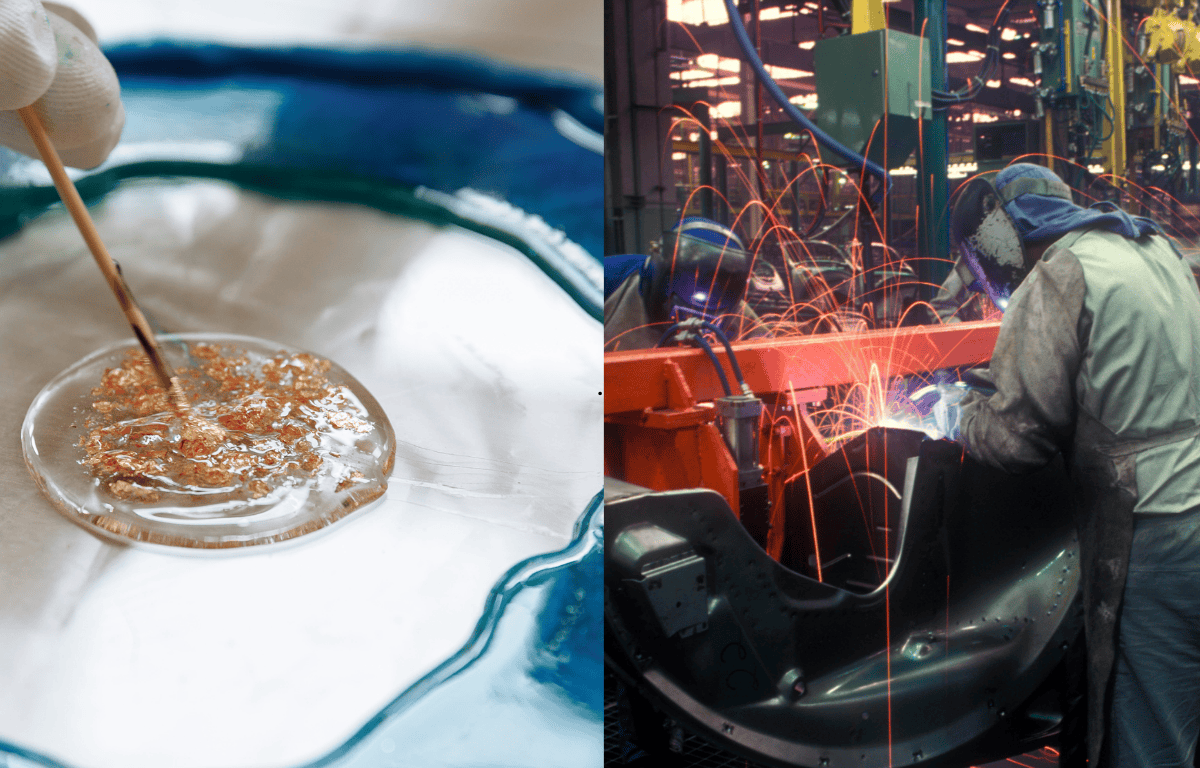
If you have ever admired a glossy tabletop, driven a car, or boarded an aircraft, you have already relied on resin. So what is resin, and why does it sit quietly behind so much of modern life? In simple terms, resin is a sticky organic substance that hardens into a strong, durable solid. Many people confuse it with plastic or glue, yet it is a distinct material with its own chemistry and purpose.
This confusion matters. Choosing the wrong material wastes money, weakens products, and creates safety risks. The global synthetic resin market was valued at over USD 521 billion in 2024, which shows how deeply these materials shape industry. In this guide, you will learn what resin is, how it works, the main types, where it is used, and how to choose the right grade for your project.
What Is Resin? A Clear Definition
Resin is a viscous, organic compound that cures into a hard, stable solid. It can occur naturally as tree sap or be produced in a factory as a synthetic resin. Once cured, resin resists heat, moisture, and many chemicals, which makes it valuable for bonding, coating, and molding.
Unlike simple glue, resin builds strength through a chemical reaction rather than by drying alone. This reaction, called polymerization, links small molecules into long, tough chains. As a result, cured resin behaves as a solid engineering material, not just a surface adhesive. That single property explains why resin appears in everything from jewelry to jet engines.
Resin vs. Plastic vs. Polymer
These three terms overlap, yet they are not identical. A polymer is any long-chain molecule. A resin is a raw, often liquid polymer or pre-polymer before it is fully shaped or cured. A plastic is usually the finished, molded product. In short, resin is frequently the starting material that later becomes a plastic part or a protective coating.
Natural Resin vs. Synthetic Resin
Every resin falls into one of two families. Understanding this split is the first step in answering what is resin for any real project, because the two types behave very differently.
A natural resin comes from plants and trees. Amber, rosin, and shellac are classic examples that humans have used for thousands of years in varnishes, incense, and adhesives. These resins are renewable but limited in strength and consistency.
A synthetic resin is engineered in a controlled process to deliver exact performance. Because chemists tune its properties, it offers superior strength, chemical resistance, and reliability. For this reason, industry depends far more on synthetic grades such as epoxy, polyester, and vinyl ester.
Table 1: Natural resin vs. synthetic resin at a glance.
| Factor | Natural Resin | Synthetic Resin |
| Source | Trees and plants (sap) | Petrochemical or bio-based feedstock |
| Consistency | Variable, batch to batch | Highly consistent and controlled |
| Strength | Moderate | High to very high |
| Cost control | Limited | Predictable and scalable |
| Typical use | Varnish, incense, crafts | Composites, coatings, adhesives |
Common Types of Resin and Their Properties
Once you move past the natural-versus-synthetic split, resins divide by how they respond to heat. This distinction decides how a resin cures, performs, and can be reused.
Thermosetting Resins
A thermosetting resin cures permanently through an irreversible chemical reaction. After curing, it cannot melt again, which gives outstanding heat and chemical resistance. Epoxy resin, unsaturated polyester resin, and vinyl ester resin all belong to this group. They dominate composites and high-performance coatings because they hold their shape under stress.
Thermoplastic Resins
A thermoplastic resin softens when heated and hardens when cooled, and it can repeat this cycle many times. Acrylic and polyethylene resins are common examples. This reversibility makes thermoplastics easy to recycle and reshape, though they usually tolerate less heat than thermosets.
Table 2: Major resin types, key properties, and typical applications.
| Resin Type | Category | Key Strength | Common Uses |
| Epoxy | Thermoset | Adhesion, strength | Coatings, electronics, aerospace |
| Unsaturated Polyester | Thermoset | Cost-effective, versatile | Fiberglass, marine, construction |
| Vinyl Ester | Thermoset | Corrosion resistance | Chemical tanks, pipes |
| Acrylic | Thermoplastic | Clarity, weathering | Signage, coatings, displays |
| Polyurethane | Both types exist | Flexibility, toughness | Foams, automotive, sealants |
How Resin Works: The Curing Process
The magic of resin lies in curing. During the curing process, a liquid resin transforms into a solid through cross-linking, where molecular chains bond into a rigid three-dimensional network. This is why cured resin is so strong and stable.
Curing can happen in several ways. Some resins cure when mixed with a hardener, others cure under ultraviolet light, and some need heat. For example, two-part epoxy cures after you combine the resin and hardener in the correct ratio. UV resin, by contrast, hardens within seconds under a UV lamp.
Getting the ratio, temperature, and time right is critical. A poor cure leaves the resin soft, sticky, or brittle. Therefore, following the manufacturer’s data sheet is essential for reliable results.
What Is Resin Used For? Everyday and Industrial Uses
Resin is one of the most versatile materials on earth. Its resin applications stretch from hobby crafts to advanced aerospace components. The right grade can bond, protect, insulate, or reinforce almost anything.
Everyday Uses of Resin
At home and in the studio, epoxy resin creates glossy tabletops, coasters, and jewelry. UV resin cures quickly for keychains and phone cases. Resin also seals floors, protects countertops, and even appears in dental fillings and long-lasting perfume fixatives.
Industrial Applications of Resin
Industry relies on resin for strength and durability. Manufacturers use it to build wind-turbine blades, boat hulls, car body panels, and circuit boards. In construction, resin protects bridges and concrete from corrosion. According to CompositesWorld, resin-based composites keep replacing metal because they are lighter yet remarkably strong.
Table 3: Where different resins are commonly used across industries.
| Industry | Resin Role | Example Product |
| Automotive | Lightweight, strong parts | Bumpers, panels, putty |
| Marine | Water and corrosion resistance | Boat hulls, gel coats |
| Electronics | Insulation and protection | Circuit board coatings |
| Construction | Durable protective layers | Floor and bridge coatings |
| Renewable energy | Structural reinforcement | Wind-turbine blades |
Resin in Composites and Coatings
Two of the largest uses of resin deserve their own spotlight: composites and coatings. Both rely on specialty resin grades engineered for demanding conditions.
In composites, resin acts as the binder that holds reinforcing fibers together. This is how composite resins turn glass or carbon fibers into panels far stronger than steel by weight. Unsaturated polyester and vinyl ester grades power boats, tanks, and building components.
In coatings, resin forms the protective film that resists weather, chemicals, and wear. Tailored coating resins shield metal packaging, wood furniture, and industrial equipment. A manufacturer such as Crest Speciality Resins develops these grades to match each surface and environment precisely.
How to Choose the Right Resin for Your Project
Selecting resin is not about picking the strongest option. It is about matching the resin to the job. Consider these key factors before you buy:
- Application type – crafts, composites, and coatings each need different resin grades.
- Cure method – decide whether UV, heat, or a two-part hardener suits your workflow.
- Environment – outdoor and chemical exposure demand higher resistance grades such as vinyl ester.
- Working time – fast-curing resins reduce mistakes but leave little room for adjustment.
- Safety and compliance – check food-contact or emission standards where they apply.
Common Mistakes to Avoid
Beginners often mix the wrong ratio, rush the cure, or skip surface preparation. Each error weakens the final part. Working in poor ventilation is another frequent and avoidable risk. When performance is critical, consult a resin manufacturer’s R&D team rather than guessing.
Sustainability and the Future of Resins
Resin’s biggest challenge is its environmental footprint. Traditional petroleum-based grades decompose slowly, so the industry is shifting toward greener options. Bio-resins made from soy, corn, and other plants now break down more easily and cut carbon impact.
Recycled resins also turn plastic waste into new, useful products. Research groups such as the American Chemical Society continue to publish advances in low-carbon and bio-based formulations. As regulations tighten worldwide, manufacturers that invest in sustainable resin technology will lead the next decade of growth.
Resin Safety and Handling Best Practices
Uncured resin can irritate skin, eyes, and lungs, so safe handling is essential. Regulators including the U.S. EPA and OSHA publish guidance on ventilation, exposure limits, and disposal. Follow these best practices every time you work with resin:
☑ Wear nitrile gloves and safety glasses at all times.
☑ Work in a well-ventilated area or use extraction.
☑ Measure resin and hardener by the exact ratio on the data sheet.
☑ Avoid skin contact with liquid resin and hardener.
☑ Store resin sealed, cool, and away from sunlight.
☑ Dispose of waste according to local regulations.
Frequently Asked Questions About Resin
What is resin in simple words?
In simple words, resin is a sticky organic substance that hardens into a strong, durable solid. It can be natural, like tree sap, or synthetic, like epoxy. Once cured, resin resists heat, water, and chemicals, which makes it useful for coatings, adhesives, and molded parts across countless industries.
Is resin the same as plastic?
No, resin and plastic are related but not identical. Resin is usually the raw, often liquid material before shaping, while plastic is the finished, molded product. Many plastics start as a synthetic resin that is later cured or molded into its final form. So resin is the ingredient, and plastic is often the result.
What are the main types of resin?
The main types split into thermosetting and thermoplastic resins. Thermosets such as epoxy resin, polyester, and vinyl ester cure permanently and resist heat well. Thermoplastics like acrylic soften with heat and can be reshaped or recycled. Each family suits different jobs, from strong composites to clear, weather-resistant coatings.
How does resin harden or cure?
Resin hardens through a chemical reaction called curing. During this curing process, molecules cross-link into a rigid network. Some resins cure when mixed with a hardener, others cure under UV light or heat. Correct ratio, temperature, and time are essential, because a poor cure leaves the resin soft or brittle.
Is resin toxic or safe to use?
Uncured resin can irritate skin, eyes, and lungs, so it requires care. Once fully cured, most resins are inert and safe to touch. Always wear gloves, work with good ventilation, and follow safety guidance from bodies such as OSHA. Food-contact uses require grades approved for that purpose.
What is resin used for most often?
Resin is used most often in coatings, adhesives, and composites. In daily life it appears in glossy crafts, floor sealants, and electronics. In industry, resin applications include boat hulls, wind-turbine blades, car parts, and protective coatings. Its versatility is why resin touches nearly every manufacturing sector.
What is the difference between epoxy and polyester resin?
Epoxy resin offers stronger adhesion, lower shrinkage, and better chemical resistance, so it suits demanding jobs. Polyester resin is more affordable and cures faster, which makes it popular for fiberglass and general composites. Epoxy costs more but performs better, while polyester balances cost and speed for large-volume work.
Are there eco-friendly resins?
Yes, eco-friendly resins are growing quickly. Bio-resins made from soy, corn, or algae decompose more easily than petroleum grades. Recycled resins also reuse plastic waste. While these options still face performance and cost challenges, ongoing research is closing the gap and pushing sustainable synthetic resin into the mainstream.
How do I choose the right resin?
Choose resin by matching it to your application, cure method, and environment. For crafts, epoxy gives clarity and ease. For outdoor or chemical exposure, vinyl ester resists corrosion. Check working time, safety rules, and compliance needs. When results are critical, a specialty resin manufacturer can recommend the exact grade you need.
What exactly is resin made of?
Resin is made of long-chain organic molecules called polymers. Natural resin comes from plant and tree secretions, while synthetic resin is produced from petrochemical or bio-based feedstocks. These molecules cure into a strong, stable solid.
Why is resin used instead of metal?
Resin is used instead of metal because resin-based composites are lighter yet very strong, resist corrosion, and cost less to shape. This makes resin ideal for boats, wind blades, and car parts where weight and durability both matter.
Can resin be recycled?
Some resins can be recycled. Thermoplastic resins soften with heat and can be reshaped many times, so they recycle well. Thermosetting resins cure permanently and are harder to recycle, though new chemical methods are improving that.
How long does resin take to cure?
Resin curing time varies by type. UV resin cures in seconds under a lamp, while two-part epoxy may take several hours to set and one to three days to reach full strength. Always check the product data sheet for exact times.
Now that you can answer what is resin with confidence, the next step is applying that knowledge to real projects. The right resin turns raw fibers into strong composites and bare surfaces into protected, long-lasting products. Whether you need durable composite resins for structural parts or tailored coating resins for tough environments, matching the grade to the job is what delivers results. Explore how Crest Speciality Resins engineers specialty resin solutions that help manufacturers build lighter, stronger, and more sustainable products for the years ahead.
