
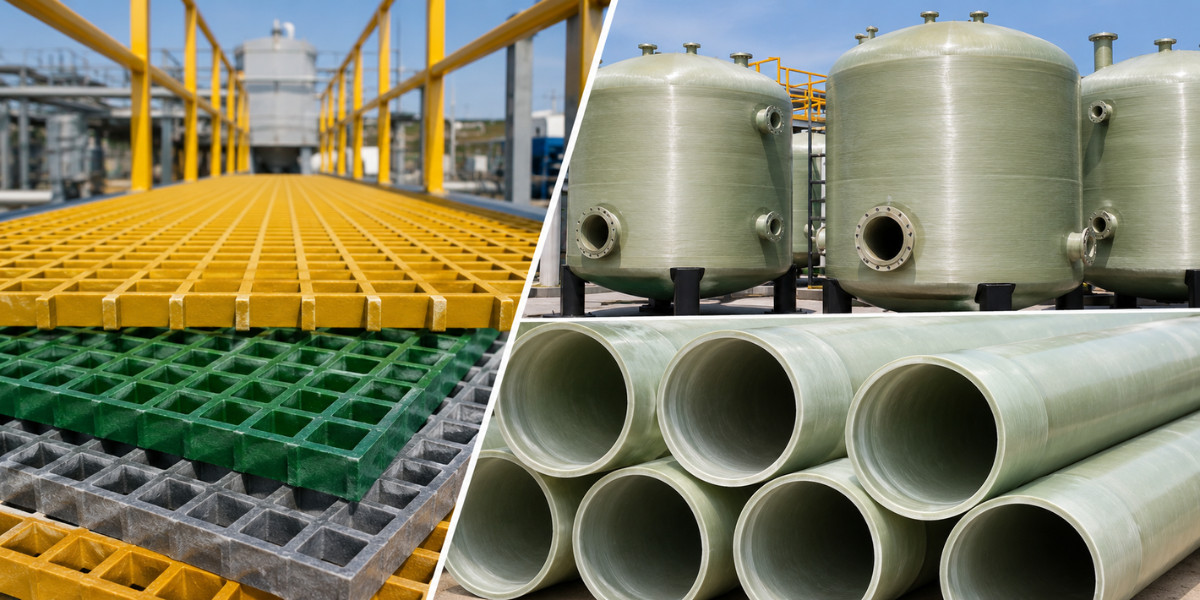
Explore the benefits of Unsaturated Polyester Resin for FRP products, offering excellent strength, corrosion resistance, and manufacturing efficiency.
Composite materials have transformed modern manufacturing. Today, industries demand materials that are strong, lightweight, durable, and cost-effective. From automotive components to marine structures, composites have become essential in many sectors. However, the strength of any composite depends heavily on one critical ingredient, its resin system. This is why stronger composites begin with Unsaturated Polyester Resin.
Among the many resin systems available today, UPR remains one of the most widely used. It offers an ideal balance of performance, processing ease, and affordability. As a result, manufacturers across industries continue to rely on it for producing high-performance composite products.
What Is Unsaturated Polyester Resin?
Unsaturated Polyester Resin is a thermosetting polymer. Once mixed with catalysts and curing agents, it hardens into a strong cross-linked structure.
In simple terms, this resin acts as the binding matrix in composite materials. It holds reinforcement materials such as glass fibres, fillers, or other strengthening agents together. Consequently, the final composite gains structural integrity and durability.
Because of its versatile chemistry, Unsaturated Polyester Resin can be tailored for different performance needs. It can be modified to improve flexibility, mechanical strength, corrosion resistance, or heat performance depending on the application.
Why Unsaturated Polyester Resin Dominates Composite Manufacturing?
The growing demand for composite materials has increased the importance of reliable resin systems. Among all available options, Unsaturated Polyester Resin remains a preferred choice because it delivers consistent performance while maintaining cost efficiency.
First, it offers excellent mechanical strength. Composite products require strong bonding between reinforcement fibres and the resin matrix. Fortunately, UPR provides good adhesion, which improves load distribution within the composite.
Secondly, it supports multiple manufacturing processes. Whether manufacturers use hand lay-up, spray-up, pultrusion, filament winding, or compression moulding, this resin performs efficiently.
Moreover, the resin cures quickly. Faster curing improves production speed and reduces manufacturing time. Therefore, manufacturers can achieve higher output without sacrificing quality.
Advantages of Using UPR
Unsaturated Polyester Resin Improves Composite Strength
Strength is one of the main reasons manufacturers choose Unsaturated Polyester Resin. Composite structures often face heavy loads, vibrations, and environmental stress. Weak bonding can cause cracks, delamination, or structural failure. However, a strong resin matrix distributes stress effectively throughout the material.
This is where UPR adds significant value. It improves several important mechanical properties, including:
- Tensile strength
- Flexural strength
- Impact resistance
- Dimensional stability
- Structural rigidity
As a result, composite parts remain strong under demanding operating conditions. For example, FRP panels, industrial tanks, and automotive body parts rely on these properties for long-term performance.
Unsaturated Polyester Resin for Corrosion Resistance
Many industrial environments expose materials to moisture, chemicals, and aggressive operating conditions. In such cases, corrosion resistance becomes essential.
High-quality Unsaturated Polyester Resin helps protect composite structures from chemical degradation. When properly formulated, it resists water absorption and chemical attack.
Therefore, it is widely used in:
- FRP tanks
- Pipes
- Chemical storage vessels
- Cooling towers
- Marine structures
These applications demand long service life. Because corrosion damage is reduced, maintenance costs are also lowered. Additionally, specialized grades of Unsaturated Polyester Resin offer improved resistance for harsh chemical environments.
Cost Efficiency of Unsaturated Polyester Resin
Performance matters, but cost remains equally important in manufacturing. One major advantage of Unsaturated Polyester Resin is its affordability compared with many advanced resin systems. While high-end materials like epoxy offer premium performance, they often increase production cost.
In contrast, Unsaturated Polyester Resin provides excellent value for large-scale production. Manufacturers benefit from:
- Lower material costs
- Easy processing
- Reduced cycle time
- High-volume production capability
As a result, companies can produce durable composite products while maintaining competitive pricing. This balance between cost and performance makes the resin highly attractive across industries.
Applications in Modern Industries
The versatility of Unsaturated Polyester Resin allows it to serve a wide range of industries. In the automotive sector, lightweight composite components help improve fuel efficiency and design flexibility. In marine applications, corrosion resistance ensures longer service life in harsh environments.
Construction industries also depend on this resin for structural panels, roofing systems, and reinforcement products. Common applications include:
- Automotive body panels
- Boat hulls
- FRP gratings
- Pipes and tanks
- Wind energy components
Because the resin adapts to multiple manufacturing methods, its industrial demand continues to grow.
The Future of Composite Manufacturing with Unsaturated Polyester Resin
- Composite technology continues to evolve rapidly. Manufacturers now seek better performance, faster production, and sustainable materials. Therefore, resin innovation has become more important than ever.
- Modern formulations of Unsaturated Polyester Resin now offer improved fire resistance, low styrene emissions, and enhanced durability. These advancements help manufacturers meet stricter environmental and performance standards.
- Furthermore, industries increasingly demand lightweight yet strong materials. This trend ensures that Unsaturated Polyester Resin will remain relevant in future composite innovations.
Concluding Thoughts
Strong composites are never built by reinforcement alone. Behind every durable FRP structure, lightweight automotive part, or corrosion-resistant industrial component lies a powerful resin system. That system is often UPR.
Its strength, versatility, corrosion resistance, and cost efficiency make it a foundation of modern composite manufacturing. Moreover, it supports high-volume production without compromising performance.
Simply put, if industries want stronger, more reliable, and cost-effective composites, stronger composites truly begin with Unsaturated Polyester Resin.
COMPANY INFO
Website: www.crestresins.com
Phone: +91 9879233188
Email: enquiry@crestresins.com
Address: 605/A, 6th Floor, Tower D, Times Square Grand Office, Sindhubhavan Marg, Near Taj Hotel, Ahmedabad, Gujarat - 380059
