
Discover how epoxy resin temperature resistance supports grills, ovens, and mufflers. Learn how heat, thermal cycling, and resin selection affect coating performance.
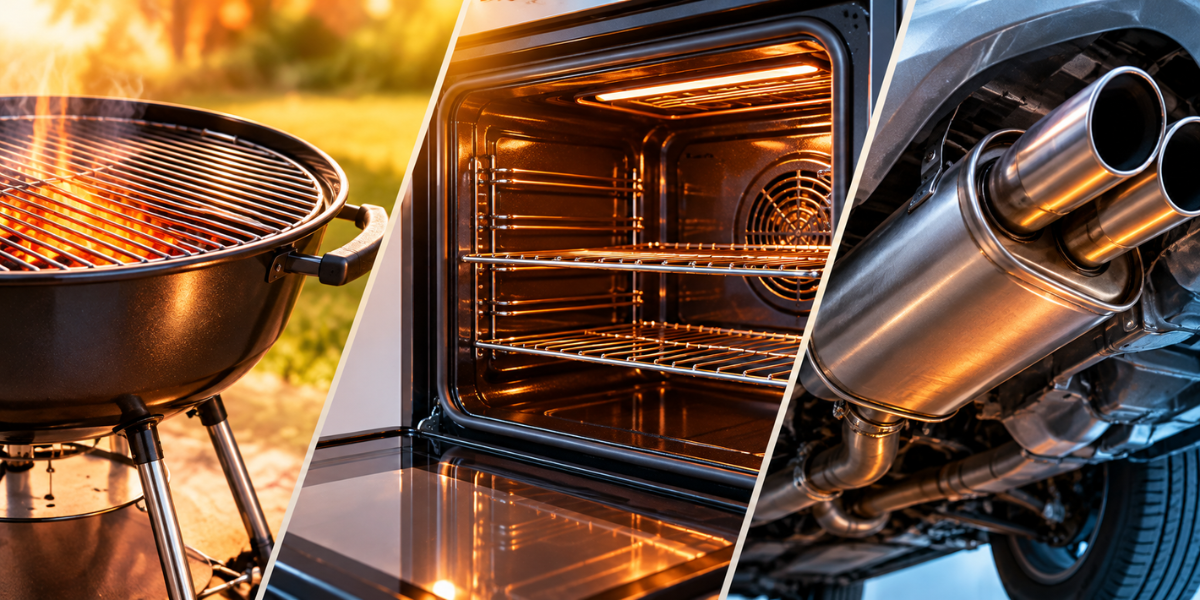
When a surface faces high heat every day, the right resin can make a major difference. Grills, ovens, and mufflers are exposed to elevated temperatures, repeated heating and cooling, and demanding operating conditions. Therefore, the resin used for these applications must offer reliable thermal performance along with good adhesion and durability.
Understanding epoxy resin temperature resistance helps manufacturers choose a formulation that can withstand heat without losing its protective properties.
What Is Epoxy Resin Temperature Resistance?
Epoxy resin temperature resistance refers to the ability of an epoxy-based material to maintain its physical and protective properties when exposed to heat.
As temperature rises, polymers can become softer and may eventually lose strength. However, a well-designed heat-resistant epoxy system can maintain better stability within its intended operating range.
The actual performance depends on several factors, including resin chemistry, curing system, formulation, coating thickness, substrate, and exposure time. Therefore, a single temperature rating should not be used as the only measure of performance.
Epoxy Resin Temperature Resistance for Grills
Grills are exposed to direct and indirect heat during cooking. Moreover, their surfaces may experience rapid temperature changes when they are heated and cooled repeatedly.
For grill applications, the coating system should provide:
- Good resistance to elevated temperatures
- Strong adhesion to metal surfaces
- Resistance to repeated thermal cycling
- Good surface durability
- Protection against oxidation and environmental exposure
Furthermore, the coating should maintain its appearance and protective function under regular use. A suitable resin formulation can help improve the service life of coated grill components.
Epoxy Resin Temperature Resistance for Ovens
Ovens operate in a challenging thermal environment. Internal components can experience sustained heat, while external parts may face temperature fluctuations during operation.
Consequently, resin selection becomes important for oven-related components such as metal surfaces, housings, racks, and other heat-exposed parts.
A suitable epoxy system should combine thermal stability, adhesion, hardness, and chemical resistance. In addition, it should be formulated according to the expected temperature range and exposure conditions.
However, oven applications vary considerably. Therefore, manufacturers should evaluate the complete coating system under actual service conditions before final selection.
Why Mufflers Need Heat-Resistant Resin?
- Mufflers and exhaust components face a different type of thermal challenge. They can experience high temperatures, vibration, thermal cycling, moisture, and road exposure.
- As a result, the coating must do more than simply tolerate heat. It should also maintain adhesion while the metal substrate expands and contracts.
- This is where epoxy resin temperature resistance becomes an important consideration. A properly formulated resin can support better coating stability and help protect the underlying metal from demanding environmental conditions.
- Moreover, the resin system should be selected according to the actual temperature profile of the muffler. Peak temperature, continuous operating temperature, substrate type, and coating thickness all influence performance.
Thermal Cycling Matters Too
High temperature is only part of the challenge. In many applications, components repeatedly move from cooler conditions to high heat and then back again.
This process is known as thermal cycling. Over time, repeated expansion and contraction can create stress within a coating.
Therefore, a resin should be evaluated for both temperature resistance and thermal-cycle performance. Good adhesion and suitable flexibility can help the coating remain intact during repeated temperature changes.
How to Select the Right Resin?
Choosing the right resin starts with understanding the application. First, determine the expected operating temperature and peak temperature. Next, consider how long the material will remain at elevated temperatures.
Also consider:
- Metal or substrate type
- Continuous versus intermittent heat
- Thermal cycling
- Chemical exposure
- Required hardness
- Adhesion requirements
- Outdoor or indoor conditions
- Desired coating life
Most importantly, the resin should be tested under conditions that closely represent the final application.
Concluding Thoughts
Epoxy resin temperature resistance is an important consideration for heat-exposed applications such as grills, ovens, and mufflers. However, thermal performance should always be considered alongside adhesion, durability, chemical resistance, and thermal cycling.
With the right formulation and application process, epoxy-based resin systems can provide reliable protection for demanding industrial and consumer applications. At Crest, technical expertise and application-focused resin development help manufacturers select solutions based on their specific performance requirements. The right resin does not simply withstand heat, it is designed to perform under the conditions that matter.
COMPANY INFO
Website: www.crestresins.com
Phone: +91 9879233188
Email: enquiry@crestresins.com
Address: 605/A, 6th Floor, Tower D, Times Square Grand Office, Sindhubhavan Marg, Near Taj Hotel, Ahmedabad, Gujarat - 380059
