
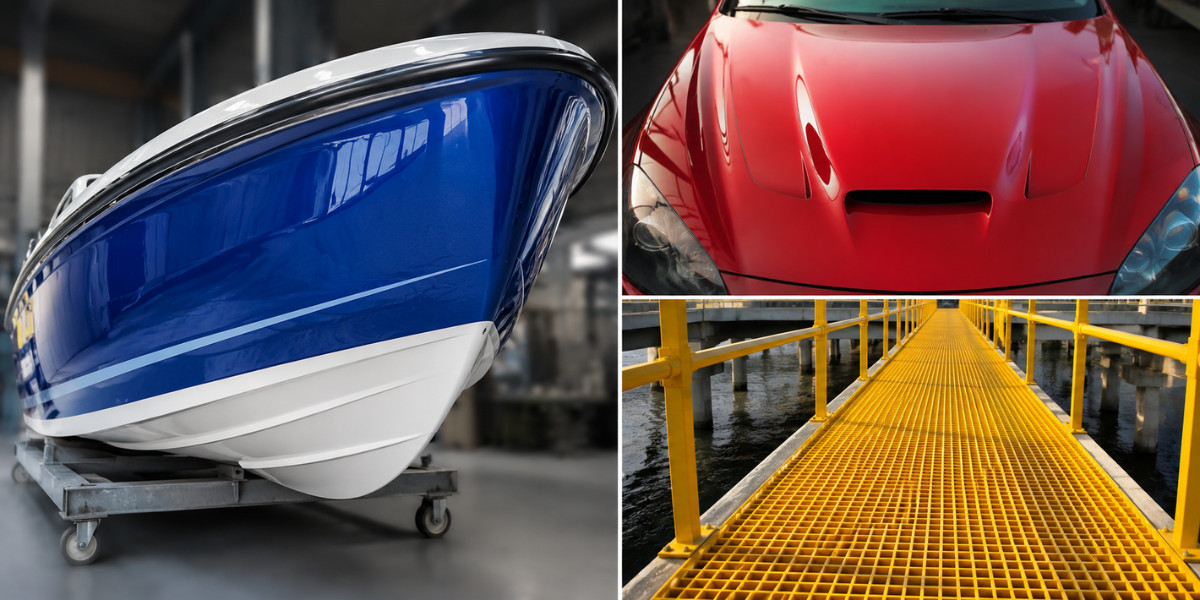
Discover how composite resins enhance strength, durability, and corrosion resistance in automotive, marine, and construction applications for superior long-term performance.
As industries continue to evolve, the demand for materials that offer both strength and efficiency have increased significantly. This is where composite resins make a major impact. These advanced resin systems help manufacturers build lightweight yet durable structures that perform well under demanding conditions.
From modern electric vehicles to marine vessels and large infrastructure projects, composite resins have become indispensable. Moreover, they improve product lifespan while reducing maintenance costs. Because of these benefits, industries across the world are adopting composite technologies at a rapid pace. Let us understand how composite resins are shaping key industries.
The Science Behind Composite Resins and Their Growing Demand
At the core of every composite structure lies a resin matrix. Composite resins bind reinforcing fibres such as glass fibre or carbon fibre and distribute stress across the material.
As a result, composite materials achieve a remarkable balance of strength and weight. Additionally, these resins provide resistance against moisture, chemicals, and environmental wear. Therefore, they are widely preferred over conventional materials in performance-driven applications.
Driving Automotive Innovation with Lightweight Composite Structures
The automotive industry constantly seeks lighter materials to improve fuel efficiency and vehicle performance. Consequently, composite resins have become essential in modern vehicle manufacturing.
They are commonly used in:
- Body panels
- Bumpers
- Car bonnets
- EV battery enclosures
- Interior structural components
Because composite materials weigh less than steel, overall vehicle weight decreases. As a result, fuel consumption and energy usage are reduced.
Furthermore, composite resins provide excellent impact resistance and corrosion protection. This improves durability while supporting innovative vehicle designs.
Navigating Harsh Waters with Advanced Marine Composites
Marine applications demand materials that can survive constant exposure to saltwater, humidity, and UV radiation. Traditional materials often degrade under such conditions. However, composite resins perform exceptionally well.
They are widely used in:
- Boat hulls
- Yachts
- Deck panels
- Marine cabins
- Offshore structures
High-performance composite resins, especially vinyl ester-based systems, offer excellent water and chemical resistance. Because water absorption remains low, structural integrity is preserved.
Additionally, lightweight composite structures improve vessel speed and fuel efficiency. Therefore, marine manufacturers increasingly prefer resin-based composites.
Building Stronger Infrastructure with Composite Resin Technology
The construction industry is moving toward durable and low-maintenance materials. As a result, composite resins are gaining strong adoption in infrastructure applications.
Their common uses include:
- FRP rebars
- Bridge decks
- Roofing panels
- Chemical tanks
- Industrial pipes
- Structural gratings
One major advantage is corrosion resistance. Steel can rust over time, especially in aggressive environments. In contrast, composite structures offer superior durability.
Moreover, composite materials reduce installation challenges because they are lighter than conventional materials. This improves project efficiency and lowers labor requirements.
Performance Benefits That Make Composite Resins Stand Out
The widespread adoption of composite resins is driven by their performance advantages.
- Reduced Weight Without Compromising Strength: Composite materials deliver impressive strength while remaining significantly lighter than traditional materials.
- Excellent Resistance to Corrosion and Chemicals: They perform well in harsh environments where metals often fail.
- Greater Design Freedom: Complex geometries and custom shapes can be manufactured more easily.
- Lower Maintenance Over Time: Because degradation occurs slowly, repair and maintenance costs are reduced.
- Longer Operational Life: Durability improves overall lifecycle performance and investment value.
These benefits make composite resins highly valuable across industries.
The Future Outlook for Composite Resins
The global demand for high-performance materials continues to rise. Therefore, the future of composite resins looks highly promising.
Automotive companies are accelerating EV production. Marine manufacturers are seeking more durable lightweight structures. Meanwhile, construction industries are investing in resilient infrastructure.
As resin technologies continue to advance, newer formulations are being developed with improved fire resistance, sustainability, and mechanical performance.
Final Thoughts
Composite resins are transforming the automotive, marine, and construction industries by enabling stronger, lighter, and more durable composite structures. Their ability to resist corrosion, reduce weight, and improve service life makes them essential in modern manufacturing.
As industries push for better performance and sustainability, composite resins will continue to shape the future of engineering and infrastructure.
COMPANY INFO
Website: www.crestresins.com
Phone: +91 9879233188
Email: enquiry@crestresins.com
Address: 605/A, 6th Floor, Tower D, Times Square Grand Office, Sindhubhavan Marg, Near Taj Hotel, Ahmedabad, Gujarat - 380059
