
Discover how Unsaturated Polyester Resin supports FRP manufacturing with strength, versatility, easy processing, and cost-effective performance across industries.
Fiber Reinforced Plastic (FRP) is used across industries where strength, durability, and design flexibility matter. From chemical storage tanks and pipes to automotive components, roofing sheets, and marine structures, FRP has become an important engineering material. However, behind the reinforcement fibres lies a material that holds the entire composite together and it is Unsaturated Polyester Resin.
Although glass fibre often gets attention for providing reinforcement, the resin matrix plays an equally important role. It binds the fibres, transfers loads, creates the required shape, and protects the reinforcement from the surrounding environment. Therefore, choosing the right resin can significantly affect the performance of the final FRP component.
What Is Unsaturated Polyester Resin?
Unsaturated Polyester Resin, commonly known as UPR, is a thermosetting resin widely used in composite manufacturing. It is generally produced through a reaction between polyhydric alcohols and unsaturated or saturated acids or anhydrides. The resulting polyester is usually dissolved in a reactive monomer, which helps control viscosity and enables curing.
During processing, the liquid resin can be combined with glass fibre and formed into different shapes. After curing, it develops into a rigid thermoset structure. As a result, the finished composite offers useful mechanical strength, dimensional stability, and durability.
Furthermore, UPR can be formulated for different manufacturing methods and performance requirements. This versatility is one reason it has remained a major resin system in the FRP industry.
Why Unsaturated Polyester Resin Matters in FRP Manufacturing?
- In an FRP composite, fibres provide reinforcement, while Unsaturated Polyester Resin forms the continuous matrix around them. Therefore, the resin helps distribute stress across the reinforcement instead of allowing loads to remain concentrated in one area.
- At the same time, the resin gives the component its shape and surface characteristics. Once cured, it helps maintain dimensional stability and protects the embedded fibres.
- Good wet-out is also important during FRP production. The resin needs to flow around and between fibres so that the reinforcement can be properly impregnated. Consequently, suitable resin viscosity and processing characteristics can reduce voids and support consistent laminate quality.
Key Benefits of Unsaturated Polyester Resin
- One major advantage of Unsaturated Polyester Resin is its balance between processing efficiency and end-product performance. It can be formulated for a wide range of FRP applications, from simple moulded products to large industrial structures.
- In addition, UPR provides good compatibility with common glass fibre reinforcements. Because it starts in liquid form, it can be processed through several established composite manufacturing techniques.
- Another important factor is curing flexibility. Depending on the formulation and process, curing conditions can be adjusted to suit production requirements. Therefore, manufacturers can select resin systems based on gel time, viscosity, mechanical performance, surface finish, and other processing needs.
- UPR-based composites also provide a useful strength-to-weight ratio. This makes them suitable for applications where reducing component weight is important without moving entirely to metallic structures.
UPR Across FRP Manufacturing Processes
The versatility of Unsaturated Polyester Resin can be seen in the range of FRP production methods where it is used.
For example, hand lay-up and spray-up processes use liquid resin to impregnate reinforcement during moulding. Pultrusion, meanwhile, can use suitable UPR systems to produce continuous profiles such as structural sections and other FRP components.
Additionally, manufacturers can develop resin systems for sheet moulding compound (SMC) and dough moulding compound (DMC) applications. Manufacturers widely use these processes to produce moulded parts with consistent dimensions and repeatable quality.
UPR is also used in filament winding, where resin-impregnated fibres are wound around a mandrel to create products such as pipes and tanks. Thus, one resin family can support very different manufacturing technologies.
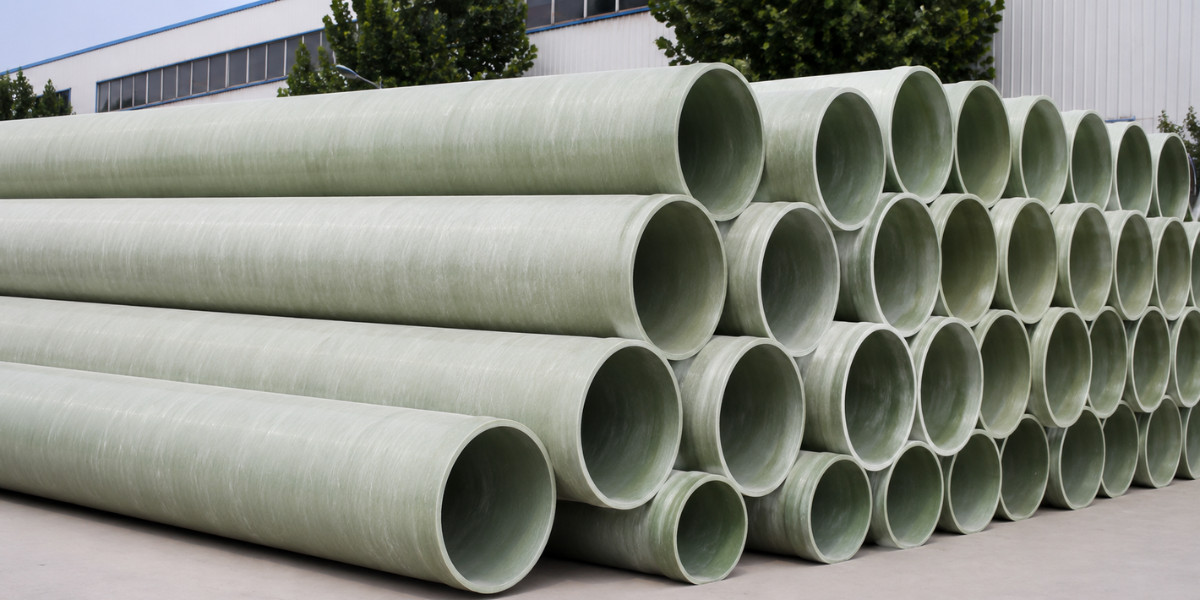
Unsaturated Polyester Resin Use
As formulations are adapted to specific requirements, Unsaturated Polyester Resin has uses in many sectors.
FRP tanks, pipes, ducts, panels, gratings, roofing sheets, sanitary products, electrical components, marine parts, and automotive components are common examples. It finds in application in construction products where lightweight structures, corrosion resistance, and design flexibility are valued.
However, not every UPR grade is suitable for every environment. Manufacturers should consider chemical exposure, temperature, structural load, weathering, and manufacturing conditions when selecting a resin.
Choosing the Right UPR
The performance of an FRP product depends on more than the reinforcement alone. Resin chemistry, viscosity, curing behaviour, fibre compatibility, and processing conditions can all influence the result.
Therefore, manufacturers should select Unsaturated Polyester Resin according to both the application and the manufacturing process. A resin developed for pultrusion, for instance, may require different characteristics from one intended for hand lay-up or moulded composite parts. Moreover, consistent resin quality can support predictable processing, better surface finish, and reliable product performance.
The Hidden Force Behind Strong FRP Products
FRP may appear simple from the outside, but its performance depends on the interaction between reinforcement, resin, manufacturing method, and design. Within that system, Unsaturated Polyester Resin acts as the matrix that brings the composite together.
It surrounds the reinforcement, transfers loads, supports the required shape, and contributes to the durability of the finished component. Furthermore, its processing flexibility allows manufacturers to produce everything from moulded automotive parts to large tanks, pipes, panels, and structural profiles.
Final Thoughts
As FRP applications continue to expand, Unsaturated Polyester Resin remains an important material behind efficient and versatile composite manufacturing. Choosing the right formulation can help manufacturers achieve the balance of processing, performance, durability, and productivity required for demanding FRP applications.
COMPANY INFO
Website: www.crestresins.com
Phone: +91 9879233188
Email: enquiry@crestresins.com
Address: 605/A, 6th Floor, Tower D, Times Square Grand Office, Sindhubhavan Marg, Near Taj Hotel, Ahmedabad, Gujarat - 380059
