
Discover the key benefits of coating resins in industrial and commercial applications, including durability, corrosion resistance, chemical protection, and long-term performance.
Industrial and commercial surfaces face constant exposure to moisture, chemicals, heat, abrasion, weather, and daily wear. Therefore, selecting the right protective coating is important for maintaining surface quality and extending service life. Coating resins form the foundation of many high-performance coatings because they help create a strong, durable, and protective film.
From metal structures and machinery to buildings, packaging, and industrial equipment, coating resins support a wide range of applications. Moreover, different resin technologies can be selected according to the required performance, processing method, and environmental conditions.
What Are Coating Resins?
Coating resins are polymer-based materials used as the main binder in coating formulations. They hold other ingredients together and help the coating adhere to the target surface.
Depending on the application, manufacturers may use polyester, acrylic, epoxy, polyurethane, vinyl ester, silicone-modified, or other resin systems. Each type offers different properties. Therefore, the resin must be matched carefully with the surface and operating conditions.
Key Benefits of Coating Resins
1. Excellent Surface Protection
One of the main benefits of coating resins is their ability to protect surfaces from external damage. Once applied and cured, the coating creates a protective layer that can reduce the impact of moisture, chemicals, abrasion, and environmental exposure. As a result, coated surfaces can maintain their appearance and performance for longer periods.
2. Improved Corrosion Resistance
Metal surfaces are often exposed to water, humidity, salts, and chemicals. These conditions can lead to corrosion and surface deterioration.
However, a suitable resin-based coating can create a barrier between the metal and its surrounding environment. Consequently, it can help reduce corrosion and support longer service life for industrial components.
3. Strong Adhesion
Good adhesion is essential for coating performance. If a coating does not bond properly with the substrate, cracking, peeling, or delamination may occur.
High-quality coating resins help coatings bond effectively with surfaces such as metal, concrete, wood, and composite materials. Therefore, the correct resin system can improve coating durability and reliability.
4. Chemical Resistance
Industrial equipment may come into contact with acids, alkalis, solvents, oils, and other aggressive substances. For this reason, chemical resistance is an important requirement in many coating applications.
Specialized coating resins can provide resistance to specific chemicals, helping protect surfaces in demanding industrial environments. Furthermore, the right formulation can be designed according to the expected chemical exposure.
5. Better Weather and UV Performance
Outdoor structures experience sunlight, rain, humidity, temperature changes, and pollution. Over time, these conditions can affect both appearance and performance.
Certain resin systems offer improved resistance to weathering and UV exposure. Consequently, they are suitable for applications such as architectural surfaces, industrial panels, infrastructure, and exterior equipment.
6. Enhanced Mechanical Performance
Industrial coatings often need to withstand impact, friction, abrasion, and repeated handling. Therefore, mechanical strength is another important benefit.
Depending on the resin chemistry, coatings can be formulated to provide improved hardness, flexibility, toughness, or abrasion resistance. This helps protect surfaces during demanding service conditions.
7. Better Appearance and Finish
Coatings are not only used for protection. They can also improve the visual appearance of products and structures.
Coating resins can support different finishes, including glossy, matte, smooth, and textured surfaces. In addition, they can help improve colour retention and surface uniformity.
8. Application Versatility
Different coating resin technologies can be developed for different application methods. These may include spray coating, roller application, brushing, dipping, or industrial automated processes.
As a result, coating manufacturers can select a resin system that fits their production process while meeting the required performance standards.
Coating Resins for Diverse Applications
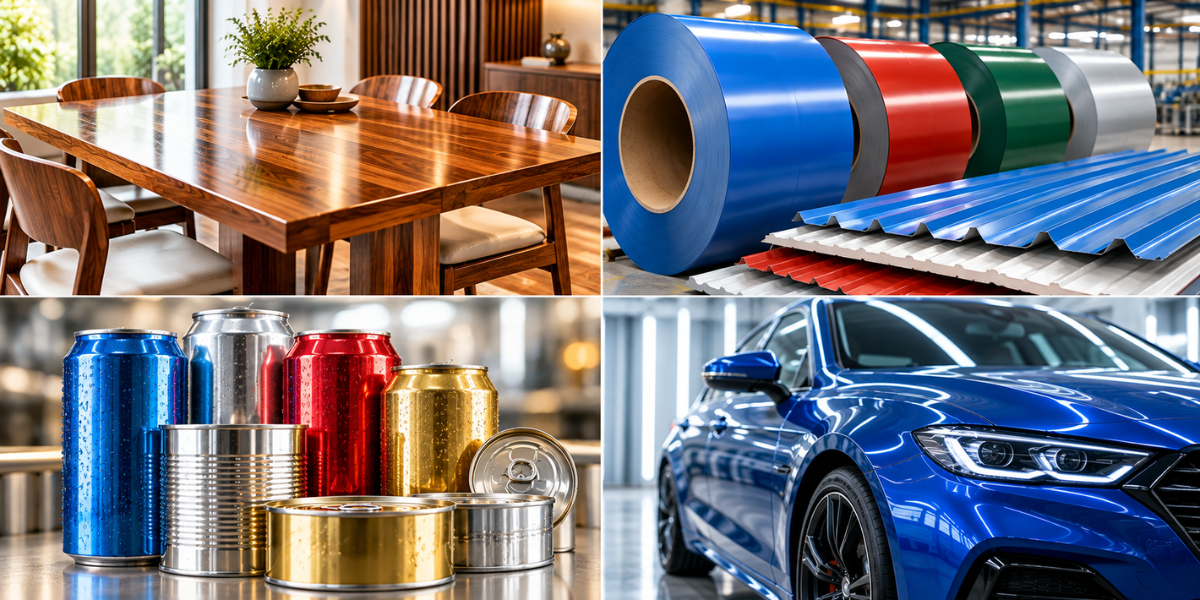
Today, coating resins are used across many industries. For example, they support automotive components, metal packaging, industrial equipment, construction materials, electrical components, furniture, marine structures, and infrastructure.
Moreover, resin technology continues to evolve as manufacturers seek better durability, lower emissions, improved processing, and more sustainable solutions.
Concluding Thoughts
Coating resins play a critical role in modern surface protection. They can improve corrosion resistance, chemical resistance, adhesion, mechanical durability, weather performance, and appearance. Furthermore, their versatility allows coating formulations to be developed for specific industrial and commercial requirements.
As industries demand longer-lasting and higher-performing surfaces, choosing the right coating resins can help manufacturers achieve reliable protection and improved product performance.
COMPANY INFO
Website: www.crestresins.com
Phone: +91 9879233188
Email: enquiry@crestresins.com
Address: 605/A, 6th Floor, Tower D, Times Square Grand Office, Sindhubhavan Marg, Near Taj Hotel, Ahmedabad, Gujarat - 380059
