
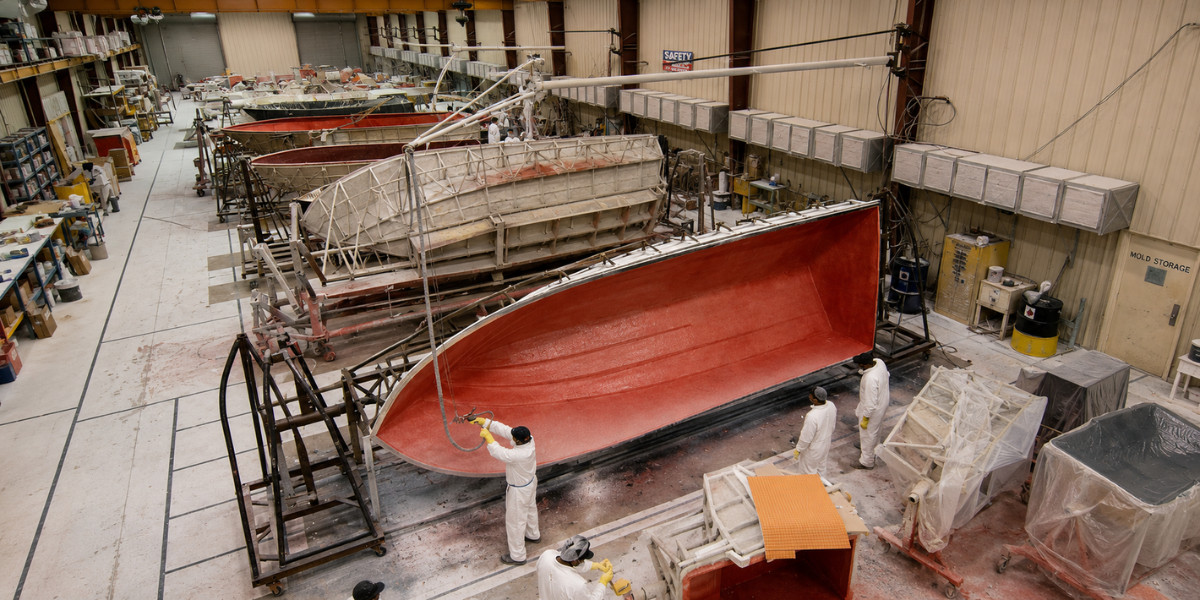
In the world of composite materials, Unsaturated Polyester Resins play a major role in manufacturing durable and cost-effective fibre reinforced plastic (FRP) products. These resins are widely used because they offer an excellent balance of mechanical strength, chemical resistance, and easy processing.
As industries continue to demand lightweight yet strong materials, FRP applications are growing rapidly. From storage tanks and pipes to marine structures and automotive parts, FRP products are being used almost everywhere. At the heart of many of these applications lies one important material is Unsaturated Polyester Resins. So, what makes these resins so popular? Let us explore the major benefits.
What Are Unsaturated Polyester Resins?
Unsaturated Polyester Resins are thermosetting polymers produced by chemical reactions. They are usually dissolved in reactive monomers such as styrene to improve processing and curing.
Once cured, these resins form a rigid three-dimensional network. As a result, the final FRP product gains excellent structural strength and durability.
Because of their versatile nature, these resins are often chosen for hand lay-up, spray-up, filament winding, pultrusion, and compression moulding processes.
Advantages of Unsaturated Polyester Resin
High Strength-to-Weight Ratio
- One of the biggest advantages of Unsaturated Polyester Resins in FRP applications is their high strength-to-weight ratio. FRP components made using these resins remain lightweight while maintaining impressive mechanical strength. Therefore, manufacturers can reduce product weight without compromising performance.
- This benefit becomes highly valuable in sectors such as automotive, transportation, and marine. Lighter structures improve fuel efficiency and reduce handling costs. At the same time, sufficient strength is maintained for demanding operating conditions. Because of this balance, these resins are preferred in many structural composite applications.
Excellent Corrosion Resistance
- Another major benefit of Unsaturated Polyester Resins is their strong resistance to corrosion. FRP products are often exposed to harsh chemicals, moisture, saltwater, or industrial gases. Traditional materials such as steel may corrode under these conditions. However, properly formulated polyester resin systems can resist many aggressive environments.
- For example, FRP tanks, pipelines, scrubbers, and ducts are widely used in chemical processing plants because corrosion-related failures are minimized. As a result, maintenance costs are reduced, and equipment life becomes longer.
Cost-Effective for Large-Scale Production
- Cost efficiency is a key reason why Unsaturated Polyester Resins dominate the FRP market. Compared with many advanced resin systems, these resins offer strong performance at a relatively lower cost. Therefore, manufacturers can achieve quality composite products without significantly increasing production expenses.
- In large-scale industrial production, raw material cost matters greatly. Since polyester resins are economical, they help businesses remain competitive.
- Additionally, processing equipment requirements are often simpler. Because of this, manufacturing costs are further optimized. This combination of performance and affordability makes these resins highly attractive.
Easy Processing and Fast Curing
- Manufacturing efficiency is critical in composite production. Fortunately, Unsaturated Polyester Resins are easy to process. These resins offer adjustable viscosity, good fiber wet-out, and convenient curing behaviour. Consequently, they perform well in various FRP fabrication techniques.
- Fast curing is another major advantage. Production cycles can be shortened, which improves throughput and productivity. In many cases, curing can be accelerated using catalysts and promoters. Thus, manufacturers gain better control over production timelines.
- Because processing flexibility is high, these resins suit both simple and complex component designs.
Good Mechanical Performance
- Mechanical reliability is essential for FRP applications. Here, Unsaturated Polyester Resins deliver dependable performance. They provide good tensile strength, flexural strength, and dimensional stability. Therefore, FRP components can withstand mechanical loads and environmental stress.
- Under repeated use, structural integrity is generally maintained. Although impact performance depends on formulation, reinforced systems often show strong durability.
- In demanding industrial environments, consistent performance is highly valued. Because of this, polyester-based FRP continues to be widely adopted.
Flexible Designs Are Achieved
- Another important benefit of Unsaturated Polyester Resins is design freedom. FRP products are often created in complex shapes that would be difficult or expensive using metals. Fortunately, polyester resin systems adapt well to moulding processes. Curved surfaces, intricate profiles, and customized geometries can be manufactured with relative ease.
- As a result, industries can design application-specific components while reducing assembly complexity. This flexibility has made FRP a preferred material in architecture, transportation, and infrastructure.
Long Service Life
- Durability matters in industrial applications, and Unsaturated Polyester Resins support long-lasting FRP performance. When properly formulated and reinforced, polyester resin composites can deliver years of service with minimal degradation.
- Environmental stress, moisture, and moderate chemical exposure are effectively managed. Consequently, product lifespan improves significantly.
- Because replacement frequency decreases, long-term ownership costs also become lower. This long service life is one of the reasons FRP continues to replace conventional materials.
Concluding Thoughts
The growing demand for advanced composite materials continues to drive the use of Unsaturated Polyester Resins in FRP applications. Their popularity comes from a powerful combination of strength, corrosion resistance, easy processing, design flexibility, and cost efficiency.
Moreover, these resins help manufacturers produce lightweight yet durable composite structures for various industries.
As FRP applications continue to expand, Unsaturated Polyester Resins will remain a trusted solution for building high-performance composite products.
COMPANY INFO
Website: www.crestresins.com
Phone: +91 9879233188
Email: enquiry@crestresins.com
Address: 605/A, 6th Floor, Tower D, Times Square Grand Office, Sindhubhavan Marg, Near Taj Hotel, Ahmedabad, Gujarat - 380059
