
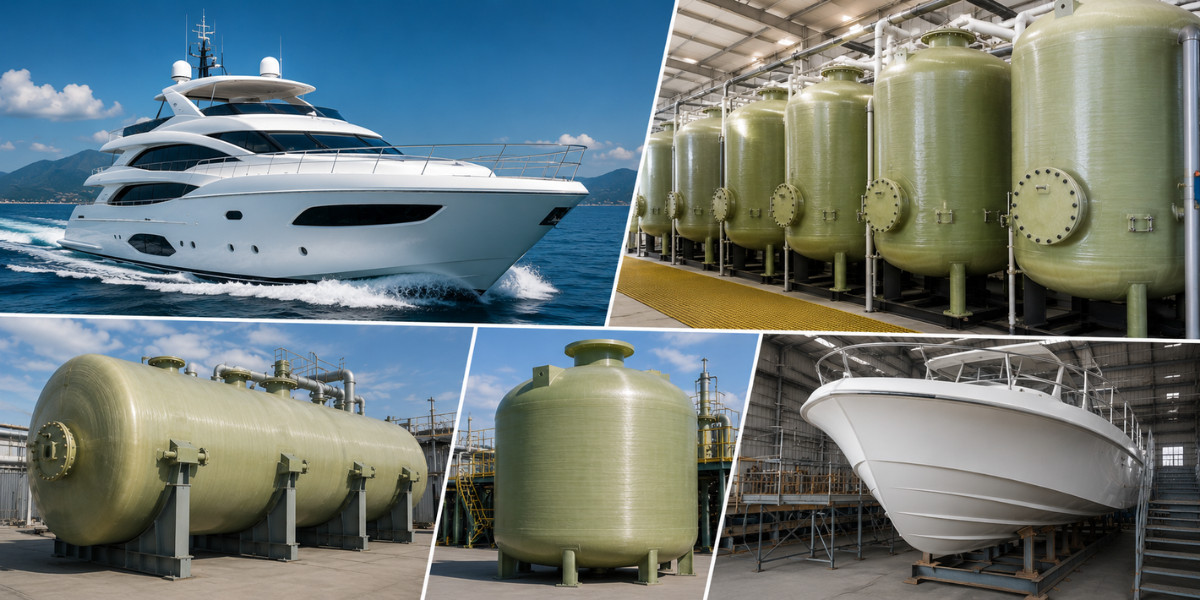
In modern composite manufacturing, vinyl ester resin has become one of the most trusted materials for producing high-performance FRP products. Manufacturers prefer it because it offers an excellent balance of strength, durability, and chemical resistance. As industries demand lighter yet stronger materials, this resin continues to gain importance.
But what makes vinyl ester resin so valuable in FRP manufacturing? The answer lies in its unique properties.
What Is Vinyl Ester Resin?
Vinyl ester resin is a thermosetting resin produced by reacting epoxy resin with unsaturated acids. As a result, it combines the mechanical strength of epoxy with the processing ease of polyester resin.
Because of this hybrid structure, the resin delivers better performance in harsh environments. It is widely used in applications where moisture, chemicals, or high stress are involved.
FRP manufacturers often choose vinyl ester resin for products that must perform under demanding industrial conditions.
Why Vinyl Ester Resin Is Important in FRP Manufacturing?
FRP, or Fiber Reinforced Plastic, relies heavily on the matrix resin. The resin binds reinforcing fibres such as glass fibre and transfers load throughout the structure.
Therefore, selecting the right resin directly affects the final product’s performance.
When vinyl ester resin is used in FRP manufacturing, the composite gains:
- Higher mechanical strength
- Better chemical resistance
- Improved thermal stability
- Lower water absorption
- Longer service life
Consequently, FRP components become more reliable in aggressive environments.
Key Properties
1. Excellent Corrosion Resistance
- One of the biggest advantages of vinyl ester resin is its outstanding corrosion resistance.
- Chemical plants, wastewater facilities, and marine structures are exposed to acids, alkalis, salts, and solvents every day. In such environments, conventional materials may degrade quickly. However, vinyl ester resin provides strong protection against chemical attack.
- As a result, FRP tanks, pipes, and scrubbers last much longer. This property is especially valued in industrial processing applications.
2. Superior Mechanical Strength
- Strength is essential in FRP manufacturing. Fortunately, vinyl ester resin offers excellent tensile and flexural properties.
- It improves load-bearing capacity and helps reduce structural failure. Moreover, it enhances the bonding between fibres and resin.
- Because of this strong adhesion, stress gets distributed more evenly across the composite. Therefore, cracks and weak points are minimized.
3. High Impact Resistance
- Many industrial components experience vibration, shock, or sudden loading. In such cases, brittle materials may fail. However, vinyl ester resin provides impressive toughness and impact resistance.
- This means FRP products can absorb sudden force without cracking easily. As a result, maintenance requirements are reduced. This property is highly beneficial in transportation and infrastructure applications.
4. Low Water Absorption
- Water absorption is often a major concern in composite applications. If moisture enters the resin matrix, long-term performance can decline. Fortunately, vinyl ester resin absorbs less water compared to many alternative resins.
- Therefore, it performs extremely well in humid and submerged conditions. This is why marine and offshore industries widely use it.
5. Better Thermal Stability
- Heat resistance matters when FRP products operate at elevated temperatures. Vinyl ester resin maintains structural integrity under thermal stress. Although continuous operating temperature depends on formulation, many grades perform reliably in high-temperature environments.
- As a result, thermal deformation is reduced. This makes the resin suitable for chemical reactors, ducts, and industrial equipment.
How This Resin Improves FRP Manufacturing?
The manufacturing process becomes more efficient when the right resin is selected. Better wetting creates fewer voids inside the composite. Consequently, product quality improves.
Additionally, faster curing can be achieved in many systems, which increases production efficiency. Production downtime is also reduced. These benefits make large-scale FRP manufacturing more economical.
Applications of Vinyl Ester Resin in FRP
Due to its performance advantages, vinyl ester resin is widely used in several industries:
- FRP chemical storage tanks
- Corrosion-resistant pipes
- Marine structures and boat components
- Scrubbers and ducts
- Bridge strengthening systems
- Wastewater treatment equipment
In these sectors, long-term durability is critical. Therefore, the resin plays a major role in ensuring product reliability.
Vinyl Ester Resin vs Polyester Resin
Many manufacturers compare polyester and vinyl ester resin before selecting materials. Polyester resin is usually cheaper. However, vinyl ester resin offers better performance in demanding environments.
Compared with polyester resin, vinyl ester resin provides:
- Better corrosion resistance
- Higher toughness
- Lower shrinkage
- Longer lifespan
- Improved crack resistance
Although the initial cost may be higher, lifecycle cost is often lower because maintenance and replacement are reduced.
Concluding Thoughts
As FRP applications continue to expand, material selection becomes more critical than ever. Vinyl ester resin stands out because it delivers strength, durability, chemical resistance, and thermal stability in one solution.
Moreover, it improves manufacturing efficiency while enhancing final product performance.
For industries that require long-lasting FRP components, vinyl ester resin remains one of the smartest choices. Simply put, when reliability matters, vinyl ester resin helps FRP products perform at their best.
COMPANY INFO
Website: www.crestresins.com
Phone: +91 9879233188
Email: enquiry@crestresins.com
Address: 605/A, 6th Floor, Tower D, Times Square Grand Office, Sindhubhavan Marg, Near Taj Hotel, Ahmedabad, Gujarat - 380059
