
Discover how Composite Resins help create lightweight, strong, and durable composite structures for automotive, marine, infrastructure, industrial, and energy applications.
Modern industries face a difficult challenge: make products stronger while reducing their weight. Heavy materials can increase energy use, transportation costs, and structural load. However, reducing weight should never mean compromising strength or durability.
This is where Composite Resins play an important role. When combined with reinforcing materials such as glass or carbon fibres, these resins help form strong composite structures with relatively low weight. As a result, manufacturers can develop components that meet demanding performance needs without relying only on heavy conventional materials.
How Composite Resins Create Strength Without Excess Weight?
Composite Resins act as the matrix that surrounds and binds reinforcing fibres within a composite material. The fibres provide much of the mechanical strength, while the resin helps transfer loads and maintain the shape of the finished component.
Therefore, the final material gains useful properties from both elements. Instead of simply increasing material thickness to improve strength, engineers can design a composite structure based on its actual performance requirements.
Moreover, resin selection can influence chemical resistance, thermal performance, durability, processing behaviour, and surface quality. For this reason, choosing the right resin system is an important part of composite manufacturing.
Composite Resins in Automotive Applications
- Weight reduction is a major consideration in automotive design. Lighter components can reduce the overall vehicle mass and support better energy efficiency.
- Composite Resins can be used in body panels, structural components, covers, housings, and other moulded parts. In addition, composite materials allow manufacturers to create complex shapes while maintaining the required mechanical properties.
- For electric vehicles, weight management becomes even more important because battery systems add considerable mass. Therefore, lightweight composite components can support efficient vehicle design while offering durability and design flexibility.
Composite Resins for Marine Structures
- Marine components operate in demanding conditions. Water, moisture, chemicals, and continuous environmental exposure can affect material performance over time.
- Composite Resins, including suitable polyester and vinyl ester systems, are widely used with fibre reinforcement in boat components, decks, panels, tanks, and other marine structures. Depending on the resin system, composites can provide strong corrosion resistance while keeping structures relatively lightweight.
- Furthermore, reduced component weight can make handling and installation easier. It can also support efficient vessel design without depending entirely on traditional metallic structures.
Supporting Infrastructure and Industrial Applications
- Composite materials are increasingly considered for industrial and infrastructure applications where corrosion, maintenance, or weight creates challenges.
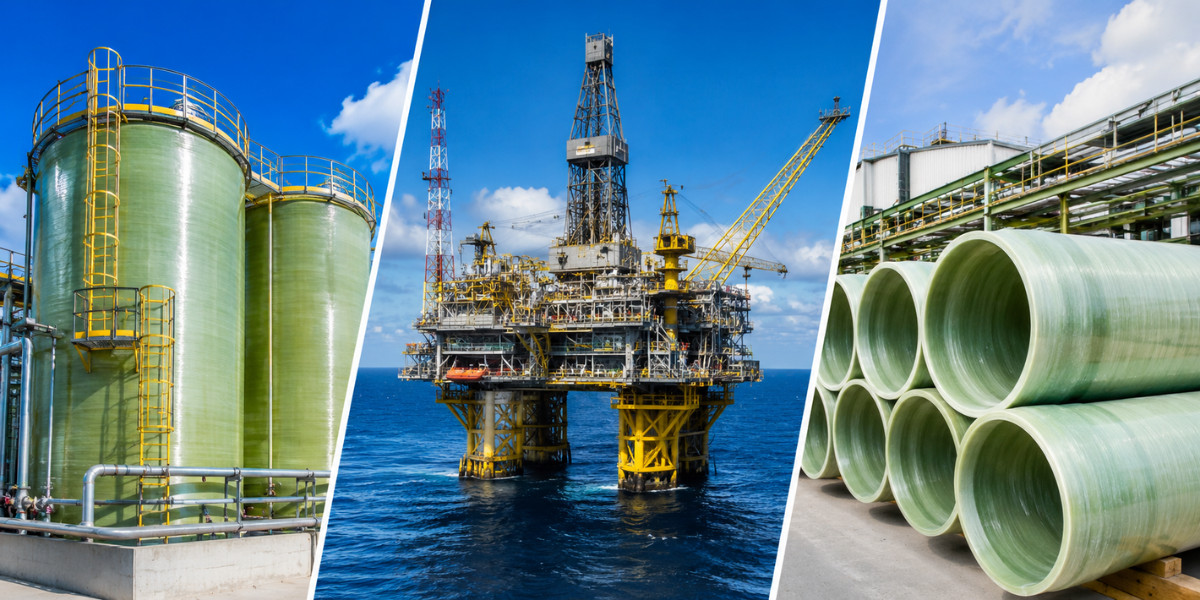
- FRP pipes, tanks, gratings, ducts, covers, and structural profiles can be manufactured using Composite Resins. These products are often selected where conventional materials may require additional protection against aggressive operating conditions.
- In addition, lightweight composite components can simplify transportation and installation. This can be especially useful for large structures or locations where handling heavy components is difficult.
Composite Resins in Renewable Energy
- Wind energy shows how lightweight materials and structural strength can work together. Wind turbine blades must withstand repeated mechanical loads while remaining light enough for efficient operation.
- Composite structures make this balance possible. Composite Resins help bind reinforcing fibres and maintain the structural integrity of large components. As a result, manufacturers can produce strong structures without adding unnecessary mass.
- Similarly, composite materials are being explored across other energy and electrical applications where strength, corrosion resistance, and weight reduction are valuable.
Performance Depends on the Right Choice
Not every application requires the same resin chemistry. Temperature, chemical exposure, mechanical load, manufacturing process, and expected service life can all influence resin selection.
For example, unsaturated polyester resins can provide a practical balance of processing and performance for many general composite applications. Meanwhile, vinyl ester resins may be selected when greater chemical and corrosion resistance is required.
Additionally, manufacturers must consider curing behaviour, fibre compatibility, viscosity, mechanical requirements, and production conditions. The right formulation can help manufacturers achieve consistent quality while meeting application-specific targets.
Concluding Thoughts
Industries no longer need to view strength and low weight as opposing goals. With appropriate reinforcement, design, and Composite Resins, manufacturers can create materials that combine mechanical performance, durability, and lower structural weight.
From vehicles and marine components to industrial equipment and renewable energy systems, composites continue to expand the possibilities of material engineering. Ultimately, the right resin system helps turn reinforcing fibres into practical structures built for demanding applications.
COMPANY INFO
Website: www.crestresins.com
Phone: +91 9879233188
Email: enquiry@crestresins.com
Address: 605/A, 6th Floor, Tower D, Times Square Grand Office, Sindhubhavan Marg, Near Taj Hotel, Ahmedabad, Gujarat - 380059
