
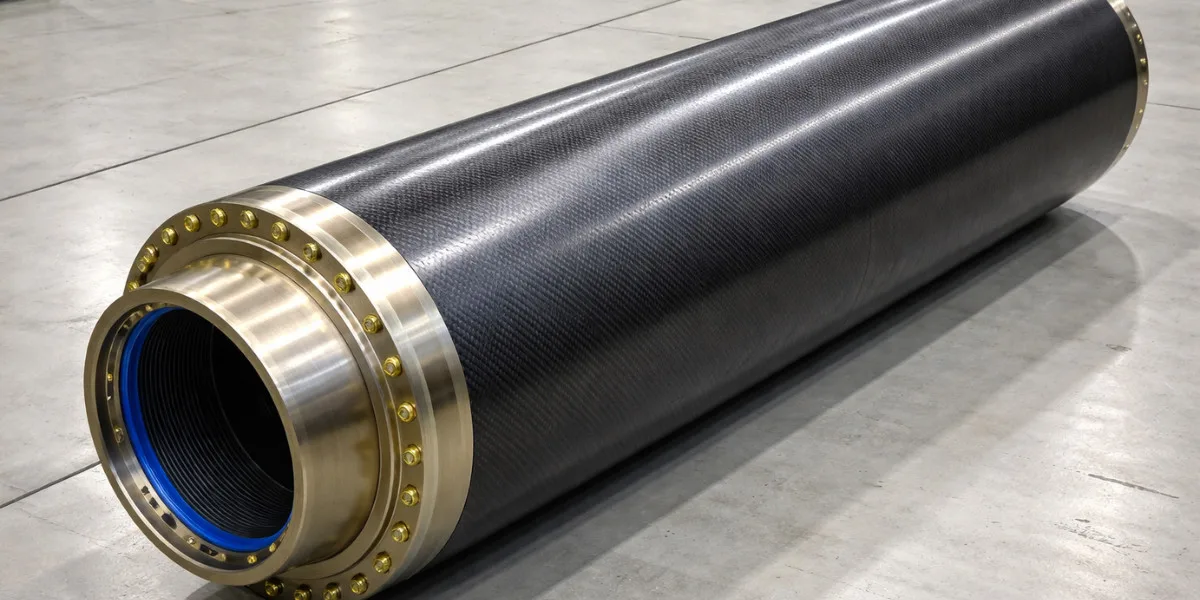
Learn how filament winding resins enhance mechanical strength in FRP systems, ensuring durability, performance, and efficiency in advanced industrial applications.
Fiber Reinforced Plastic (FRP) systems are widely used in modern industries. They offer strength, lightweight properties, and corrosion resistance. However, achieving high mechanical strength remains a key challenge. This is where filament winding resins play a crucial role.
By improving bonding and structural integrity, these resins help FRP systems perform better under stress. Therefore, industries rely on them for critical applications.
Understanding Mechanical Strength in FRP Systems
Mechanical strength refers to a material’s ability to withstand forces without failure. In FRP systems, this strength depends on both fibers and resin. While fibers provide reinforcement, the resin binds them together.
However, if the resin is weak, the entire structure may fail. As a result, choosing the right filament winding resins becomes essential.
Key factors affecting mechanical strength include:
- Fiber alignment
- Resin quality
- Curing process
- Load distribution
Because of these factors, manufacturers must optimize each element carefully.
What Are Filament Winding Resins?
Filament winding resins are specially designed materials used in the filament winding process. In this method, fibers are coated with resin and wound onto a rotating mandrel. After curing, a strong composite structure is formed.
These resins are engineered to:
- Provide strong adhesion between fibers
- Ensure uniform resin distribution
- Withstand mechanical and environmental stress
Moreover, they are designed to support high-performance applications.
How Filament Winding Resins Improve Mechanical Strength?
1. Enhanced Fiber-Matrix Bonding
The bond between fiber and resin is critical. If bonding is weak, stress cannot be transferred effectively. However, filament winding resins create strong interfacial bonding. As a result, load is distributed evenly across the structure. Therefore, the risk of failure is reduced.
2. Improved Load Distribution
In FRP systems, stress must be shared across fibers. Otherwise, localized stress may cause cracks. Filament winding resins ensure proper wetting of fibers.
Because of this, load distribution becomes more uniform. Consequently, mechanical strength is increased.
3. Resistance to Cracking and Fatigue
Repeated stress can cause fatigue in materials. Over time, cracks may develop. However, high-quality resins improve resistance to such damage.
In many cases, longer service life is achieved. This is why filament winding resins are preferred in demanding environments.
4. Thermal and Chemical Stability
Mechanical strength can degrade under heat or chemical exposure. However, advanced filament winding resins maintain stability.
Therefore, they are suitable for harsh industrial conditions. In addition, performance remains consistent over time.
Industrial Applications of Filament Winding Resins
1. Pressure Vessels and Storage Tanks
Pressure vessels require high strength to handle internal loads. Filament winding resins provide the needed durability.
They are widely used in:
- Gas cylinders
- Chemical storage tanks
- Water treatment systems
Because of their strength, safety is improved.
2. Pipes and Pipelines
FRP pipes are used in industries such as oil and gas. These pipelines must withstand pressure and corrosion.
Filament winding resins help in:
- Maintaining structural integrity
- Preventing leakage
- Extending service life
As a result, operational efficiency increases.
3. Aerospace and Defense
In aerospace, lightweight and strong materials are essential. FRP systems made with filament winding resins meet these requirements.
They are used in:
- Rocket motor casings
- Structural components
- Fuel systems
Although conditions are extreme, performance remains reliable.
4. Renewable Energy Sector
Wind energy systems rely on strong composite materials. Filament winding resins are used in wind turbine components.
Because of their durability, energy systems operate efficiently. Moreover, maintenance needs are reduced.
Key Benefits of Using Filament Winding Resins
Using filament winding resins offers several advantages. First, they enhance overall structural strength. Second, they improve durability under stress.
Additional benefits include:
- Better resistance to environmental factors
- Reduced maintenance costs
- Consistent performance over time
- High strength-to-weight ratio
Therefore, industries can achieve both efficiency and reliability.
Best Practices for Optimization
To maximize mechanical strength, certain practices should be followed:
- Select the right resin formulation
- Ensure proper fiber alignment
- Maintain controlled curing conditions
- Monitor resin viscosity and flow
If these factors are managed well, performance can be significantly improved.
Future Trends in Filament Winding Resins
As technology advances, new resin systems are being developed. These aim to offer even higher strength and durability. For instance, hybrid resins are gaining attention.
In addition, sustainable and eco-friendly resins are being explored. Therefore, the future of filament winding resins looks promising.
Concluding Thoughts
Optimizing mechanical strength in FRP systems is essential for industrial success. Filament winding resins play a vital role in achieving this goal. They improve bonding, enhance load distribution, and increase durability.
Because of their advanced properties, they are widely used across industries. Moreover, ongoing innovations continue to expand their applications. Choosing the right filament winding resin is key to building strong, reliable, and long-lasting FRP systems.
COMPANY INFO
Website: www.crestresins.com
Phone: +91 9879233188
Email: enquiry@crestresins.com
Address: 605/A, 6th Floor, Tower D, Times Square Grand Office, Sindhubhavan Marg, Near Taj Hotel, Ahmedabad, Gujarat - 380059
