
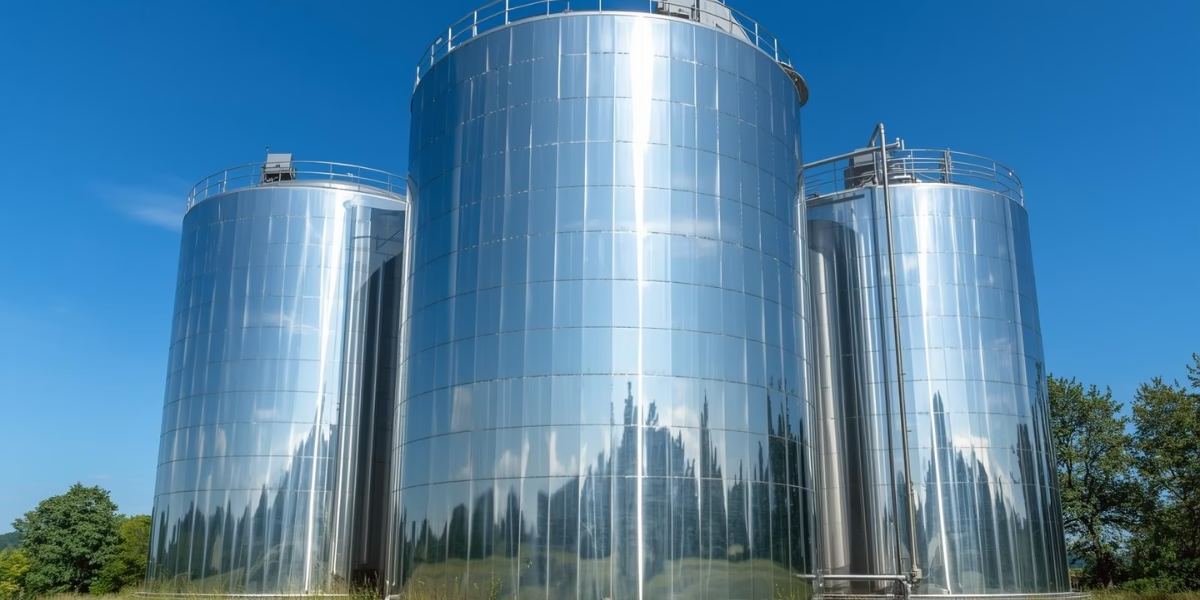
Discover how Filament Winding Resin Technology is transforming water storage and infrastructure with stronger, lighter, and corrosion-resistant composite solutions designed for long-term performance.
The water storage and infrastructure industry is evolving at a rapid pace. Growing demand for reliable, corrosion-free, and long-lasting systems has encouraged manufacturers to shift from traditional materials to advanced composites. At the heart of this shift is Filament Winding Resin Technology.
This technology enables the production of high-strength pipes, tanks, and pressure vessels. These structures support modern cities, industrial facilities, and agricultural networks. Moreover, they meet increasing performance expectations while reducing operational costs.
What Is Filament Winding Resin Technology?
Filament winding is a controlled manufacturing process that uses continuous fibers, typically glass or carbon, wound around a rotating mandrel. The fibers are saturated with a specially formulated resin and layered until the desired thickness is reached. After curing, the structure becomes a strong composite shell.
The resin plays a critical role in this process. It binds the fibers, distributes stress, and offers thermal, mechanical, and chemical resistance. Consequently, Filament Winding Resin Technology creates lightweight structures that outperform steel or concrete in many applications.
Why the Water Infrastructure Industry Is Shifting Toward Composites?
Water infrastructure faces several challenges. Pipes corrode; tanks crack. Repairs create downtime and increase expenses. Therefore, industries are searching for smarter materials.
Filament-wound composites provide an ideal solution because they deliver:
- Corrosion resistance
- High pressure tolerance
- Long service life
- Low maintenance
- Lightweight construction
Additionally, they support sustainable development by reducing energy consumption during manufacturing and installation.
Benefits of Filament Winding Resin Technology in Water Storage Systems
Filament Winding Resin Technology Can Prevent Corrosion
Water storage tanks and pipelines are often exposed to chemicals, moisture, and fluctuating climates. However, traditional materials deteriorate over time. Composite systems built with Filament Winding Resin Technology resist harsh environments. They do not rust, pit, or degrade easily. This increases service life and cuts maintenance costs dramatically.
High Strength-to-Weight Ratio
One of the biggest advantages of filament-wound structures is their strength. Resin and fiber combinations yield impressive mechanical properties. The result is a lightweight yet incredibly strong system. Therefore, engineers can design large tanks and long pipelines without worrying about structural compromise.
Long-Term Performance Under Pressure
Water storage and transport systems often operate under extreme pressures. Filament-wound components distribute stress evenly due to their cylindrical geometry and resin matrix. As a result, they offer consistent performance even in demanding applications, such as municipal supply lines and industrial water treatment plants.
Filament Winding Resin Technology Offers Faster and More Efficient Installation
Because composite pipes and tanks are lighter, handling becomes easier. Teams require fewer tools and less manpower. Therefore, project completion times decrease significantly. In addition, transportation costs drop, making infrastructure projects more economical.
Applications of Filament Winding Resin Technology in Modern Infrastructure
Filament Winding Resin Technology in Water Storage Tanks
Large composite tanks built with filament winding resist UV exposure, moisture, and chemical attack. They maintain structural integrity for decades. Additionally, they support hygienic water storage, making them ideal for municipal and industrial use.
Pressure Pipes and Distribution Lines
High-pressure water lines benefit from the superior tensile strength of filament-wound pipes. These pipes also show minimal material fatigue, even under constant flow or pressure fluctuations.
Sewage and Wastewater Systems
Wastewater contains corrosive chemicals that degrade traditional pipelines. However, composite pipes resist corrosion and abrasion. This makes them suitable for treatment plants and underground systems.
Desalination Plants
Desalination facilities handle high salinity and aggressive chemicals. Filament-wound components protect against these conditions while offering long-term durability.
How the Right Resin Formulation Improves Performance?
The resin determines many aspects of the final composite. Therefore, choosing the right formulation is essential.
Key resin characteristics that influence performance include:
- Chemical resistance
- Thermal stability
- Flexural strength
- Resistance to hydrolysis
- UV protection
Because of these properties, premium resins such as vinyl ester and epoxy are widely used in Filament Winding Resin Technology. They bond well with fibers, improve durability, and ensure consistent quality.
Sustainability Advantages
Sustainability is now a top priority for infrastructure planners. Fortunately, filament-wound composites support green initiatives in many ways.
- They require less energy to produce.
- They lighten transportation loads.
- They extend the lifecycle of infrastructure assets.
- They reduce material waste.
Additionally, new bio-based resins and recyclable composite materials are entering the market, making the technology even more sustainable.
Concluding Thoughts
Filament Winding Resin Technology is reshaping the water storage and infrastructure industry. It offers durability, corrosion resistance, and design flexibility. It also reduces long-term maintenance costs. As cities grow and water demands rise, this technology provides a reliable path forward.
Infrastructure built today must serve future generations. Filament winding stands out as a solution designed for strength, sustainability, and long-term performance.
COMPANY INFO
Website: www.crestresins.com
Phone: +91 9879233188
Email: enquiry@crestresins.com
Address: 605/A, 6th Floor, Tower D, Times Square Grand Office, Sindhubhavan Marg, Near Taj Hotel, Ahmedabad, Gujarat - 380059
