Discover how UV Curable Resins deliver rapid curing, durable finishes, and improved production efficiency across modern industrial coating and finishing applications.
Manufacturers today need coating solutions that deliver both speed and reliable performance. Production lines must move quickly, while finished surfaces still need to withstand daily wear, chemicals, moisture, and light exposure. As a result, UV Curable Resins are becoming an important choice for modern coating and finishing applications.
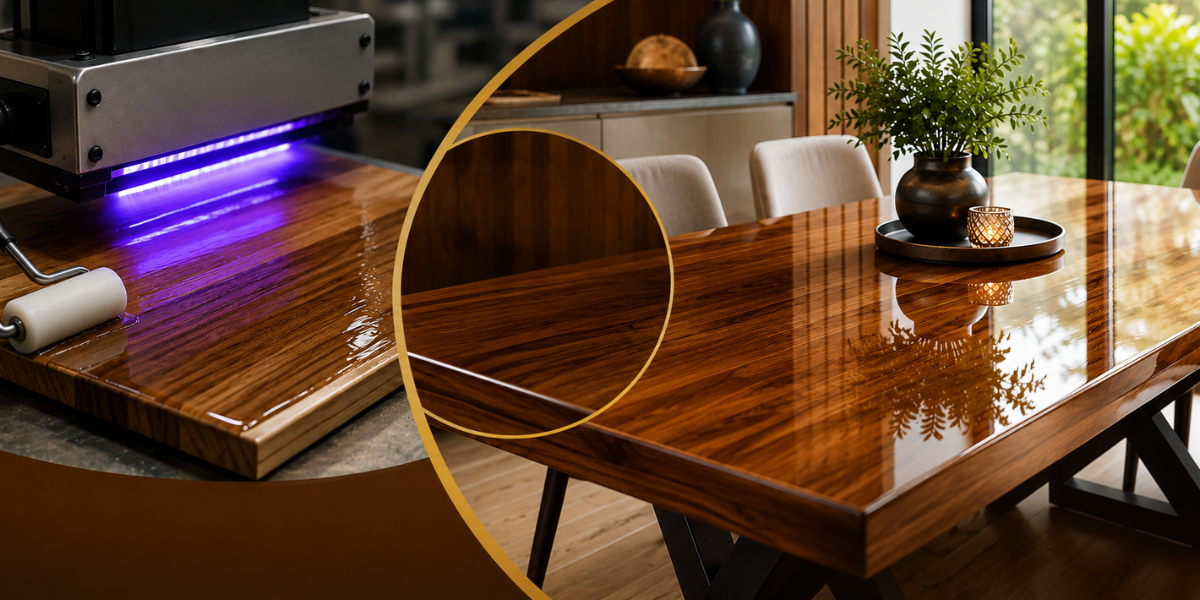
Unlike conventional systems that may require long drying or thermal curing cycles, UV-curable coatings are cured rapidly when exposed to ultraviolet light. Therefore, manufacturers can achieve a finished surface in a much shorter time.
This combination of speed and performance is helping UV technology gain attention across several industries.
Why UV Curable Resins Are Gaining Popularity?
Production efficiency has become a major priority for manufacturers. Every minute saved during curing can support higher output and smoother operations. In addition, shorter curing cycles can reduce the space needed for drying and curing areas.
UV Curable Resins are designed to react when exposed to a suitable UV light source. The liquid coating changes into a solid, crosslinked film within a very short period. Consequently, coated products can often move to the next production stage quickly.
Moreover, the curing process can be carefully controlled. This helps manufacturers maintain consistent surface quality across repeated production runs.
Key Benefits of UV Curable Resins
One of the biggest advantages of UV Curable Resins is their fast curing capability. However, speed is only one part of their value.
1. Rapid Curing
UV curing can take place within seconds under suitable conditions. Therefore, production lines can operate at higher speeds without waiting for lengthy drying periods.
2. Strong Surface Performance
Once cured, the coating can provide good hardness, scratch resistance, and surface durability. This makes UV systems useful for applications where appearance and protection are equally important.
3. Excellent Finish
UV-curable coatings can produce smooth and attractive surfaces with desirable gloss and clarity. As a result, they are widely considered for decorative and premium finishing applications.
4. Efficient Processing
Because curing is completed quickly, manufacturers can reduce work-in-progress time. In addition, compact curing systems may help optimize production floor space.
5. Reduced Material Waste
A controlled curing process can help improve coating consistency. Furthermore, precise application and curing can reduce problems caused by prolonged drying or uneven film formation.
Applications of UV Curable Resins
The versatility of UV Curable Resins allows them to serve many industries. For example, they can be used in wood coatings, furniture finishes, flooring, plastics, electronics, printing, and specialty industrial coatings.
In wood and furniture applications, UV coatings can provide an attractive and durable surface while supporting fast production. Similarly, plastic components can benefit from coatings designed to improve appearance and surface resistance. Furthermore, UV technology is being explored for applications where production speed and consistent finish quality are essential.
UV Curable Resins and Sustainable Manufacturing
- Manufacturers are also looking for ways to improve resource efficiency. UV curing can support this goal because the process is highly targeted and requires energy primarily during the curing stage.
- In many formulations, UV-curable systems can also be designed with low levels of volatile organic compounds (VOCs). However, environmental performance depends on the complete formulation, application method, and production conditions.
- Therefore, resin selection should consider both performance requirements and the manufacturer’s sustainability objectives.
Choosing the Right UV Curable Resins
- Not every UV formulation is suitable for every application. The right resin should be selected according to the required hardness, flexibility, adhesion, chemical resistance, gloss, and durability.
- Curing equipment is also important. UV wavelength, light intensity, exposure time, coating thickness, and substrate characteristics can all influence the result.
- For this reason, manufacturers should evaluate the complete coating system rather than selecting a resin based on curing speed alone. Selecting the right resin would produce the great result always.
Concluding Thoughts
As manufacturing becomes faster and more automated, demand for efficient coating technologies is expected to grow. UV Curable Resins offer an attractive balance between rapid processing and dependable surface performance.
Their ability to cure quickly while delivering durable finishes makes them suitable for industries where production efficiency matters. At the same time, ongoing formulation development is expanding their potential across new applications.
Ultimately, the rise of UV Curable Resins reflects a wider shift in manufacturing, achieving more efficient production without giving up the quality and durability that customers expect.
COMPANY INFO
Website: www.crestresins.com
Phone: +91 9879233188
Email: enquiry@crestresins.com
Address: 605/A, 6th Floor, Tower D, Times Square Grand Office, Sindhubhavan Marg, Near Taj Hotel, Ahmedabad, Gujarat - 380059
