
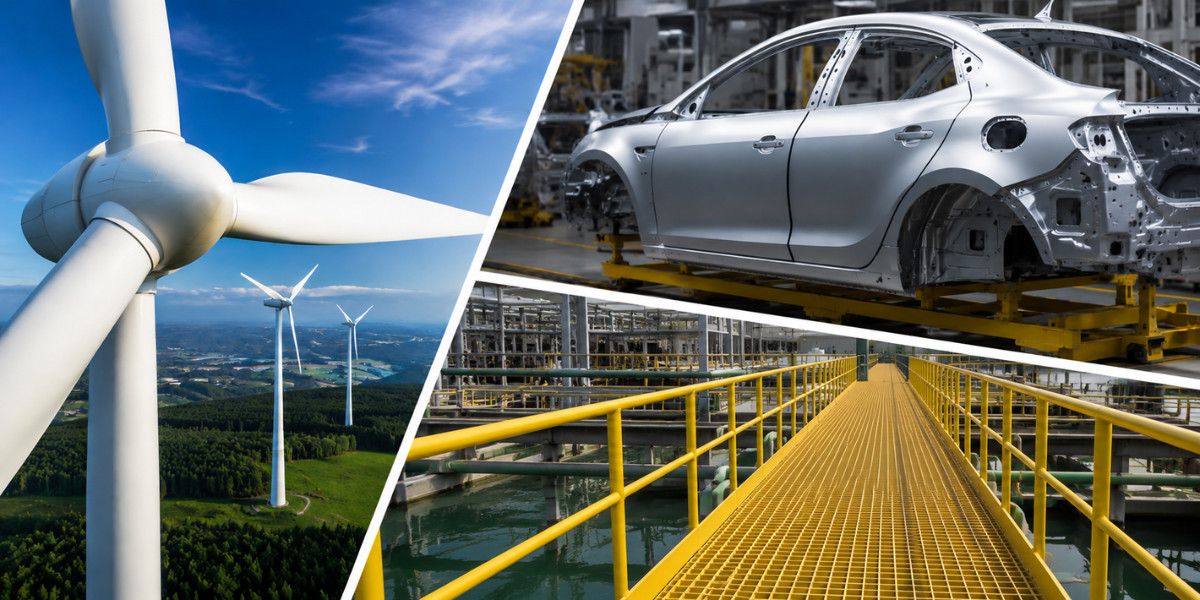
Learn how Composite Resins enhance the strength, durability, and overall performance of composite materials used in construction, automotive, aerospace, marine, and industrial applications.
Modern industries require materials that are strong, lightweight, and durable. As a result, composite materials have become a preferred choice in sectors such as aerospace, automotive, marine, construction, and renewable energy. However, the performance of these materials depends largely on one critical component, resins.
Composite resins act as the binding matrix that holds reinforcing materials, such as fiberglass, carbon fiber, or natural fibers, together. While fibers provide strength, the resin distributes loads, protects the reinforcement, and ensures structural integrity. Therefore, selecting the right composite resin is essential for achieving superior performance.
What Are Composite Resins?
Composite Resins are polymer-based materials used to bind reinforcing fibers into a solid structure. They create a strong connection between the fibers and transfer mechanical loads throughout the composite.
Common types of composite resins include:
- Polyester Resins
- Vinyl Ester Resins
- Epoxy Resins
Each resin type offers unique properties. Consequently, manufacturers choose specific resins based on performance requirements and environmental conditions.
How Composite Resins Improve Mechanical Strength?
One of the primary functions of these resins is to improve the mechanical strength of composite structures.
Effective Load Distribution
- When external forces are applied to a composite material, the resin matrix distributes the load evenly among the reinforcing fibers. As a result, stress concentrations are reduced, and the structure becomes more reliable.
- Without a strong resin system, fibers may fail prematurely. Therefore, the resin plays a critical role in maximizing the strength potential of the reinforcement.
Enhanced Impact Resistance
- Composite structures are often exposed to sudden impacts and vibrations. High-performance composite resins absorb and distribute impact energy efficiently. Consequently, the risk of cracking, delamination, or structural damage is significantly reduced.
- This feature is particularly important in automotive components, marine vessels, and aerospace structures.
Improving Durability Through Composite Resins
Durability is another key factor that makes these resins valuable across industries.
Protection Against Moisture
- Moisture can weaken composite materials over time. Fortunately, advanced composite resins create a protective barrier that limits water penetration.
- As a result, composite parts maintain their strength even in humid or marine environments. This protection is especially beneficial for boat hulls, offshore structures, and water treatment equipment.
Chemical Resistance
- Many industrial environments expose materials to chemicals, acids, and solvents. Composite resins are designed to resist chemical attack effectively.
- Therefore, they help extend the service life of tanks, pipelines, ducts, and processing equipment. In many applications, corrosion-related failures are significantly reduced.
Enhancing Thermal Performance
Temperature fluctuations can affect material performance. However, properly selected Composite Resins help maintain structural stability under varying thermal conditions.
Heat Resistance
- Certain composite resin systems are engineered to withstand elevated temperatures. As a result, they retain their mechanical properties even during continuous heat exposure.
- This capability makes them suitable for industrial machinery, automotive parts, and aerospace applications.
Dimensional Stability
- Temperature changes often cause materials to expand or contract. Composite resins minimize these effects and help maintain dimensional accuracy.
- Consequently, components continue to perform reliably throughout their operational life.
Supporting Lightweight Design with Composite Resins
- Many industries are focused on reducing weight while maintaining strength. This is where Composite Resins provide significant value.
- By combining lightweight reinforcing fibres with advanced resin systems, manufacturers can create structures that offer excellent strength-to-weight ratios.
- For example, wind turbine blades, and automotive body panels benefit from reduced weight and improved fuel efficiency. At the same time, structural performance remains uncompromised.
Improving Fatigue Resistance
- Materials that experience repeated loading can suffer fatigue damage over time. Fortunately, Composite Resins help improve fatigue resistance by distributing stresses evenly throughout the structure.
- As a result, cracks are less likely to develop during long-term use. This advantage is particularly important in bridges, transportation systems, and wind energy applications where continuous loading occurs.
Applications Benefiting from Composite Resins
The advantages of Composite Resins are evident across numerous industries.
Automotive Industry
Vehicle manufacturers increasingly rely on composites for body panels, structural parts, and electric vehicle components. Consequently, lighter vehicles can be produced without sacrificing safety.
Marine Industry
Composite resins provide excellent moisture and corrosion resistance. As a result, they are widely used in boats, yachts, and offshore structures.
Construction Industry
Building components, bridge structures, and architectural panels benefit from the durability and strength provided by advanced composite resin systems.
Renewable Energy Sector
Wind turbine blades require exceptional strength and fatigue resistance. Therefore, composite resins are essential for ensuring long-term performance in renewable energy applications.
Concluding Thoughts
Composite Resins play a fundamental role in determining the strength, durability, and performance of composite materials. They distribute loads, protect reinforcing fibres, improve chemical resistance, and enhance thermal stability. Moreover, they support lightweight design while increasing fatigue resistance.
As industries continue to seek stronger and more efficient materials, the importance of Composite Resins will only grow. By selecting the right resin system, manufacturers can develop advanced composite structures that deliver reliable performance even in the most demanding environments.
COMPANY INFO
Website: www.crestresins.com
Phone: +91 9879233188
Email: enquiry@crestresins.com
Address: 605/A, 6th Floor, Tower D, Times Square Grand Office, Sindhubhavan Marg, Near Taj Hotel, Ahmedabad, Gujarat - 380059
