
Discover how Novolac Vinyl Ester Resin delivers chemical resistance, thermal stability, and durability for demanding industrial applications.
Some industrial environments do not allow room for compromise. Strong acids, aggressive solvents, high temperatures, and continuous exposure can quickly damage ordinary materials. Therefore, industries that operate under these conditions need materials designed to withstand extreme service.
This is where Novolac Vinyl Ester Resin plays a critical role. Built for demanding chemical and thermal environments, it combines high chemical resistance with strong mechanical performance. As a result, it is widely considered a high-performance resin for applications where standard polyester resins may not provide sufficient protection.
What Makes Novolac Vinyl Ester Resin Different?
Novolac Vinyl Ester Resin is a specialized vinyl ester resin based on a novolac epoxy structure. This structure provides a high level of crosslinking after curing. Consequently, the cured resin can offer excellent resistance to chemicals, heat, and harsh operating conditions.
Unlike conventional resins designed mainly for general-purpose applications, Novolac Vinyl Ester Resin is engineered for more aggressive environments. Moreover, its strong resistance to many corrosive chemicals makes it suitable for equipment exposed to demanding process conditions.
The resin can also be reinforced with glass fibers or other suitable materials. This allows manufacturers to create composite structures with a useful balance of strength, durability, and corrosion resistance.
Novolac Vinyl Ester Resin for Extreme Chemical Resistance
Chemical exposure is one of the biggest challenges in industrial processing. Acids, alkalis, solvents, and other aggressive chemicals can attack surfaces and reduce the service life of equipment.
However, Novolac Vinyl Ester Resin is designed to provide a strong barrier against many of these chemical conditions. It is therefore used in composite equipment where corrosion protection is a major requirement.
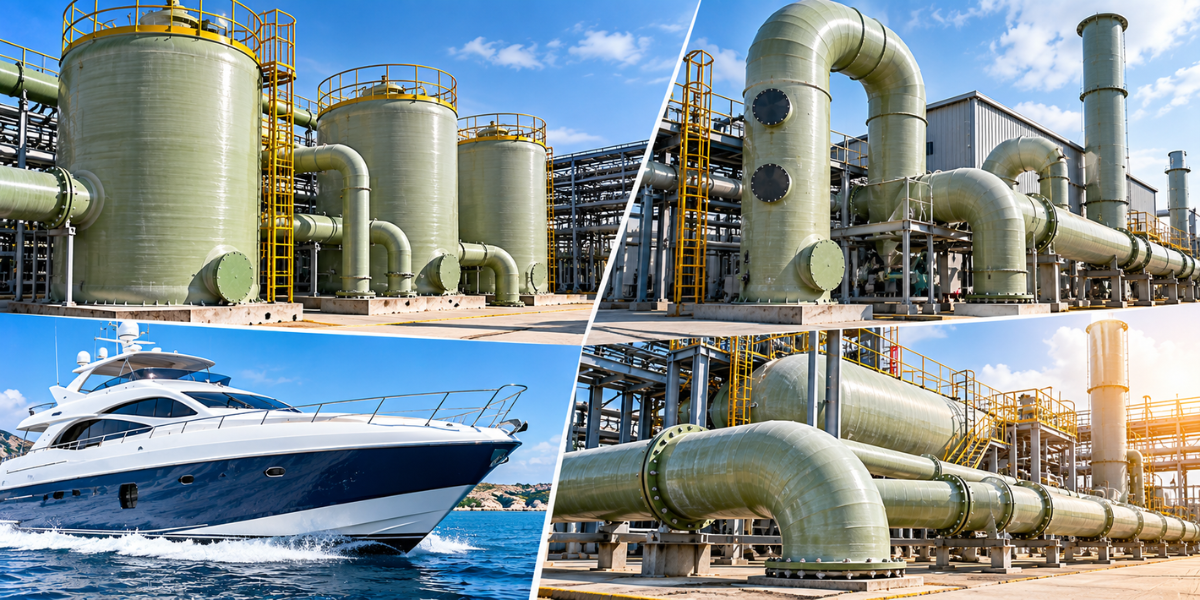
For example, chemical storage tanks, process vessels, pipes, ducts, scrubbers, and other FRP equipment can benefit from the resin’s chemical-resistant properties. Furthermore, the correct resin grade can be selected according to the chemical environment and operating temperature.
Novolac Vinyl Ester Resin and Thermal Performance
Chemical resistance is only one part of the challenge. Industrial equipment may also experience elevated temperatures during continuous operation.
Because of its highly crosslinked structure, Novolac Vinyl Ester Resin can provide improved thermal performance compared with many general-purpose polyester systems. This makes it suitable for applications where both chemical exposure and temperature variations must be considered.
Nevertheless, actual performance depends on the resin grade, curing system, reinforcement, fabrication process, and operating conditions. Therefore, technical selection should always consider the complete application rather than resin chemistry alone.
Where Is Novolac Vinyl Ester Resin Used?
The combination of chemical resistance, mechanical strength, and thermal stability makes Novolac Vinyl Ester Resin useful across several industries.
Common applications include:
- Chemical processing equipment – Tanks, pipes, scrubbers, ducts, and process vessels.
- Oil and gas facilities – Corrosion-resistant composite structures and equipment.
- Water and wastewater treatment – Components exposed to aggressive chemicals.
- Marine applications – Structures requiring resistance to demanding environmental conditions.
- Industrial flooring and linings – Protective systems used in corrosive areas.
- Power and energy facilities – Components exposed to chemicals and elevated temperatures.
- Pollution-control equipment – Scrubbers and other systems handling corrosive gases or liquids.
Thus, the resin can support industries where durability and long-term corrosion protection are essential.
Why Resin Selection Matters?
Choosing a resin simply because it offers high chemical resistance is not enough. The actual service environment must be understood first.
For instance, chemical concentration, temperature, exposure time, mechanical loading, and fabrication method can all affect performance. In addition, the reinforcement and laminate design must match the intended application.
Therefore, manufacturers should evaluate the complete operating conditions before selecting Novolac Vinyl Ester Resin. A technically appropriate formulation can help improve reliability and reduce the risk of premature material failure.
Concluding Thoughts
Industrial materials are constantly challenged by chemicals, heat, moisture, and mechanical stress. Yet demanding environments require solutions that can continue to perform under pressure.
Novolac Vinyl Ester Resin answers this need with a combination of chemical resistance, thermal capability, mechanical performance, and composite compatibility. Moreover, its versatility allows it to be incorporated into different FRP structures and protective systems.
As industries continue to demand longer equipment life and better corrosion protection, high-performance resin technologies will remain important. Novolac Vinyl Ester Resin, therefore, stands as a dependable material choice for applications where ordinary resin systems may face limitations.
When the chemistry becomes aggressive, the material must become stronger. Novolac Vinyl Ester Resin is engineered to meet that challenge.
COMPANY INFO
Website: www.crestresins.com
Phone: +91 9879233188
Email: enquiry@crestresins.com
Address: 605/A, 6th Floor, Tower D, Times Square Grand Office, Sindhubhavan Marg, Near Taj Hotel, Ahmedabad, Gujarat - 380059
