
Discover 7 key factors to consider when selecting Automotive Putty Resin, from adhesion and curing to sanding, flexibility, durability, and application performance.
Why Automotive Putty Resin Matters?
A smooth automotive finish starts long before the final coat of paint. Before painting, body surfaces often need to be repaired, levelled, and prepared. This is where Automotive Putty Resin plays an important role.
A good putty system can help fill minor dents, surface imperfections, scratches, and uneven areas. However, choosing the right resin is not only about surface smoothness. It also involves adhesion, curing, sanding, flexibility, durability, and compatibility with the complete coating system. Therefore, manufacturers should consider several technical factors before selecting an Automotive Putty Resin.
Properties of Good Automotive Putty Resin
1. Adhesion to Different Surfaces
Strong adhesion is one of the first things to evaluate. Automotive putty may be applied over metal, previously coated surfaces, fiberglass, or other substrates.
The resin should create a reliable bond with the selected surface. Poor adhesion can lead to cracking, peeling, or detachment during service. Therefore, substrate compatibility should always be checked before production.
2. Easy and Consistent Sanding
After curing, automotive putty needs to be shaped and sanded. If the material is too hard, sanding can become slow and labour-intensive. On the other hand, a putty that is too soft may not provide the required surface quality.
A well-designed Automotive Putty Resin should offer a practical balance between hardness and sandability. As a result, technicians can achieve a smooth surface without excessive effort.
3. Curing Speed
Curing time directly affects workshop productivity. A system that cures too slowly can increase waiting time. Conversely, extremely fast curing may reduce working time and make application difficult.
Therefore, the resin should provide a controlled curing profile. This allows users to mix, apply, shape, and finish the putty efficiently.
4. Surface Finish
A good automotive repair system should support a uniform and smooth surface. This is especially important because imperfections can become more visible after primer and paint are applied.
The Automotive Putty Resin should help produce a consistent finish with minimal pinholes, shrinkage, or surface defects. Consequently, proper resin selection can contribute to better appearance in the final painted component.
5. Flexibility and Crack Resistance
Automotive components experience vibration, temperature changes, impact, and mechanical stress. Therefore, putty cannot be selected based on hardness alone.
The cured material should have an appropriate balance of strength and flexibility. If the putty becomes excessively brittle, cracks may develop when the substrate moves or experiences impact. For this reason, Automotive Putty Resin should be evaluated under conditions that reflect its intended application.
6. Compatibility with the Coating System
Automotive putty is usually only one part of a larger finishing process. It may be followed by primer, surfacer, basecoat, and clearcoat.
Therefore, compatibility between the putty and subsequent coating layers is essential. The resin should support good internal coat adhesion and should not create problems such as blistering, lifting, or uneven appearance. Testing the complete coating system is often more useful than evaluating the putty alone.
7. Consistent Manufacturing Quality
Finally, resin consistency matters. Automotive putty manufacturers need predictable performance from batch to batch. Variations in viscosity, reactivity, curing behaviour, or mechanical properties can affect production and finished quality.
A reliable resin supplier should provide technical specifications and support application testing. Moreover, consistent quality can help manufacturers maintain stable production and reduce process variations.
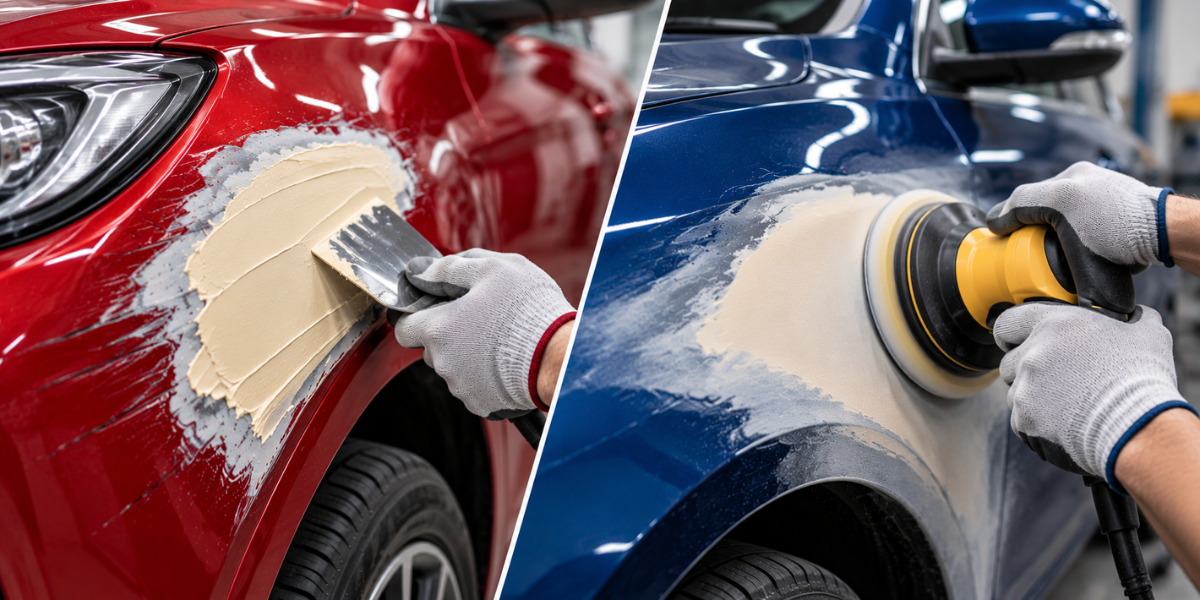
Choosing the Right Automotive Putty Resin
Selecting an Automotive Putty Resin requires more than comparing basic specifications. Adhesion, sanding behaviour, curing, surface finish, flexibility, coating compatibility, and batch consistency should all be considered together.
Furthermore, the right resin depends on the application, substrate, processing method, and required finish. Technical evaluation and application trials can therefore help identify the most suitable formulation.
Concluding Thoughts
Automotive repair demands materials that combine practical processing with dependable performance. By evaluating these seven factors, manufacturers can develop putty systems that support smoother application, efficient finishing, and consistent results.
The right Automotive Putty Resin is not simply a raw material. It is an important part of the performance and appearance of the finished automotive surface.
COMPANY INFO
Website: www.crestresins.com
Phone: +91 9879233188
Email: enquiry@crestresins.com
Address: 605/A, 6th Floor, Tower D, Times Square Grand Office, Sindhubhavan Marg, Near Taj Hotel, Ahmedabad, Gujarat - 380059
