
Discover how Automotive Putty Resin delivers strong adhesion, smooth application, easy sanding, and a reliable surface finish for automotive repair and refinishing.
Why Automotive Putty Resin Matters in Vehicle Repair?
A smooth vehicle surface is essential for a high-quality automotive finish. However, dents, scratches, holes, and uneven areas can make this difficult. This is where Automotive Putty Resin plays an important role.
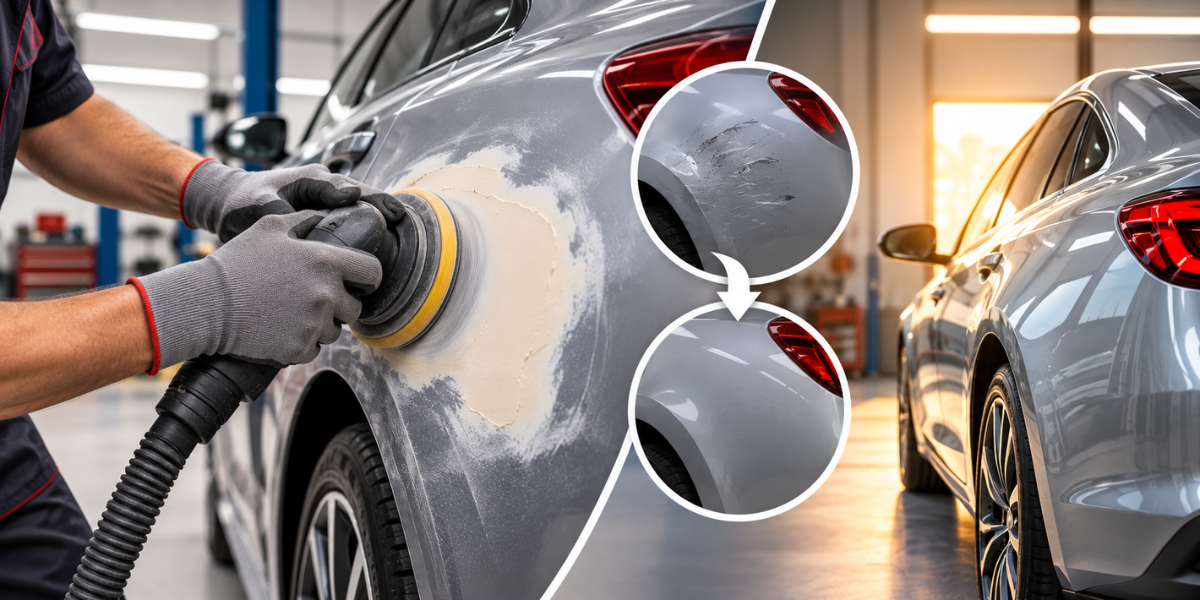
Automotive putty is used to fill surface imperfections before primer and paint are applied. Therefore, the resin must provide good adhesion while remaining easy to shape and sand. When these properties work together, repair professionals can achieve a cleaner surface with less effort.
Moreover, good-quality putty resin supports a consistent repair process. It helps create a strong base that can handle the next stages of refinishing.
The Must Have Properties of an Automotive Putty Resin
Strong Adhesion Creates a Reliable Repair
- One of the key benefits of Automotive Putty Resin is strong adhesion. Putty needs to bond properly with the prepared substrate. If adhesion is weak, cracks, peeling, or surface defects may appear later.
- A well-designed resin system helps the putty grip the surface effectively. As a result, it can stay in place during sanding, priming, and painting. Strong adhesion is especially useful when repairing curved panels and areas with minor body damage.
- In addition, proper surface preparation remains important. The surface should be clean, dry, and free from oil, dust, and other contaminants. This allows the resin-based putty to develop better contact with the substrate.
Easy Sanding Saves Time and Effort
- Strong adhesion is important, but it is only part of the equation. Automotive Putty Resin should also support easy sanding. Once the putty has cured, technicians need to shape the repaired area to match the original surface.
- A resin with suitable sanding characteristics can make this step faster and more controlled. It allows technicians to remove excess material without excessive effort. Consequently, the repaired area can be blended more smoothly with the surrounding panel.
- Furthermore, easy sanding can help reduce labour time. This matters in professional workshops where several vehicles may need to be repaired each day.
Smooth Application Improves Surface Quality
- Another important factor is application behaviour. Automotive putty should spread evenly and fill surface defects without creating unnecessary ridges or air pockets.
- When the material has good flow and workable consistency, technicians can apply it more accurately. Therefore, fewer corrections may be needed before sanding. A smoother application can also support a better final appearance after primer and paint.
- At the same time, the resin system should offer a practical working window. This gives technicians enough time to apply and shape the putty properly before it becomes difficult to work with.
Durability Supports Long-Term Performance
- Vehicle surfaces face vibration, temperature changes, moisture, and everyday wear. Because of this, an automotive repair material must do more than look good immediately after application.
- Automotive Putty Resin can contribute to a durable repair when it is formulated for suitable mechanical performance and used under the recommended conditions. A strong repair system helps maintain the filled area as the vehicle moves through regular use.
- Additionally, compatibility with primers and topcoats is important. A well-matched repair system creates a more reliable foundation for the complete refinishing process.
Automotive Putty Resin for Better Refinishing Results
The quality of an automotive repair depends on several connected steps. First, the damaged area must be prepared correctly. Next, the putty needs to adhere well and fill imperfections. After curing, it should sand smoothly and create a level surface. Finally, primer and paint can be applied.
Therefore, choosing the right Automotive Putty Resin can improve both productivity and finish quality. Strong adhesion reduces concerns about bonding, while easy sanding helps technicians achieve the desired shape with less effort.
Concluding Thoughts
Modern automotive repair demands materials that balance performance, workability, and finish quality. Automotive Putty Resin offers an important foundation for this process by supporting strong adhesion, easy sanding, smooth application, and dependable surface preparation.
As a result, the right resin system can help repair professionals work more efficiently while producing cleaner and more consistent automotive finishes. When formulation, application, and surface preparation are properly aligned, better repair results become easier to achieve.
COMPANY INFO
Website: www.crestresins.com
Phone: +91 9879233188
Email: enquiry@crestresins.com
Address: 605/A, 6th Floor, Tower D, Times Square Grand Office, Sindhubhavan Marg, Near Taj Hotel, Ahmedabad, Gujarat - 380059
