
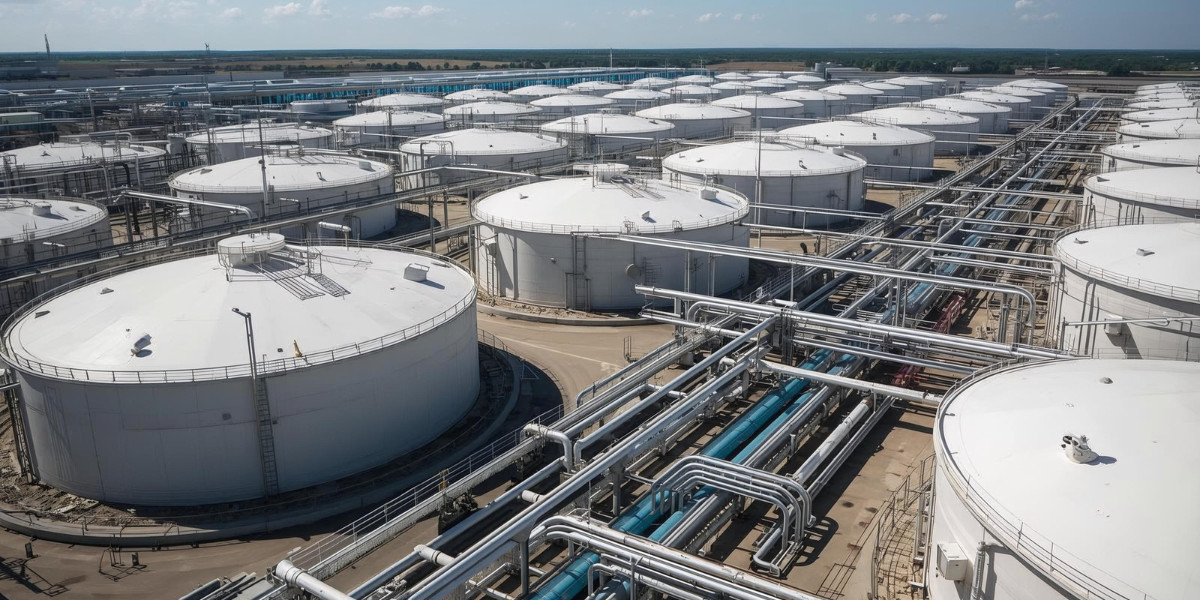
Discover why Unsaturated Polyester Resin dominates composite manufacturing, offering cost efficiency, strength, versatility, and scalable production across industries.
Composite manufacturing has evolved rapidly over the years, yet one material continues to lead the industry with remarkable consistency, and Unsaturated Polyester Resin remains the top choice for engineers, fabricators, and product designers because performance, affordability, and adaptability work together seamlessly to deliver reliable results.
This dominance is not accidental; rather, it stems from a balanced combination of mechanical strength, cost efficiency, and processing flexibility that supports both small-scale operations and high-volume industrial production. In this blog, you will understand why this resin continues to power modern composite innovation across diverse sectors.
What Makes Unsaturated Polyester Resin So Popular?
The popularity of Unsaturated Polyester Resin begins with its simple yet effective chemistry, as the resin cures quickly when mixed with a catalyst, allowing production cycles to remain short while manufacturers save time and reduce operational costs.
Because curing happens efficiently, throughput increases, and overall productivity improves without requiring complex systems. Moreover, the raw materials used in its formulation are widely available, which ensures stable supply chains and enables even large-scale industries to depend on consistent sourcing without disruption.
In addition to availability, flexibility further strengthens its appeal, since the resin can be modified easily with fillers, pigments, or performance additives, thereby allowing properties to be tailored for specific applications while maintaining processing efficiency.
Advantages of Using Unsaturated Polyester Resin
Strength and Durability Advantages of Unsaturated Polyester Resin
Composites are expected to handle mechanical stress, resist chemicals, and deliver long service life, and Unsaturated Polyester Resin successfully meet all these requirements in demanding environments. The resin forms strong mechanical bonds with fiberglass reinforcement, which results in rigid and durable composite structures that maintain high strength-to-weight ratios, an essential characteristic for transportation and construction industries.
Furthermore, corrosion resistance is excellent, which means marine structures, storage tanks, and industrial pipelines perform reliably even in harsh and chemically aggressive environments. Although these applications face constant exposure to moisture and chemicals, the resin protects surfaces effectively and ensures that long service life expectations are consistently fulfilled.
Cost Efficiency
Cost considerations strongly influence material selection in composite manufacturing, and this is precisely where Unsaturated Polyester Resin stands out due to their favorable price-to-performance balance. Compared to epoxy or vinyl ester systems, this resin is more economical while still delivering dependable mechanical and chemical performance, which allows production budgets to remain manageable without compromising quality.
In addition, processing equipment requirements are relatively simple, and specialized machinery is not always necessary, enabling smaller manufacturers to enter the market with lower initial investment. Because entry barriers are reduced, industry participation increases, and large-volume sectors such as automotive panels, roofing sheets, and molded components continue to rely on this resin for daily production.
Processing Benefits of Unsaturated Polyester Resin
Manufacturing speed plays a critical role in competitive industries, and Unsaturated Polyester Resin supports efficient production because the resin cures at room temperature, eliminating the constant need for external heating and thereby reducing energy consumption.
At the same time, it performs well across various fabrication techniques, including hand lay-up, spray-up, filament winding, pultrusion, and compression molding, which gives producers the flexibility to select methods based on product complexity and scale.
Furthermore, viscosity can be adjusted to ensure proper fiber wet-out, which minimizes air entrapment and improves surface finish, so finished components appear smooth and uniform while overall product quality improves significantly.
Versatility Across Industries Through Unsaturated Polyester Resin
Another major reason for the dominance of Unsaturated Polyester Resin is their wide applicability across industries, as the material adapts effectively to different environmental and performance requirements.
In the construction industry, panels, domes, gratings, and sanitaryware are manufactured using this resin because it keeps structures lightweight while maintaining strength and durability. In the marine sector, boat hulls and decks rely on its strong water resistance to ensure long-term reliability.
Similarly, in the automotive field, body panels and interior components benefit from its moldability, which allows complex shapes to be produced efficiently and at scale.
In electrical applications, insulating components are frequently made from this resin because it meets safety and durability standards consistently, demonstrating how one material can support multiple industrial demands with equal effectiveness.
Sustainability Trends
As sustainability becomes increasingly important, manufacturers are seeking eco-friendly solutions, and Unsaturated Polyester Resin continues to evolve in response to these expectations through improved formulations and technological advancements.
Low-styrene and styrene-free grades are now available, which help reduce emissions and improve workplace safety while maintaining performance standards. Additionally, recycling technologies are gradually advancing, enabling composite waste to be processed into fillers or energy sources, and although challenges remain in large-scale recycling, steady progress is being made.
Because of ongoing innovation, this resin remains relevant in an industry that is steadily moving toward greener manufacturing practices.
Market Demand and Future Outlook for Unsaturated Polyester Resin
Global demand for composites continues to grow as infrastructure projects expand, renewable energy installations increase, and industries seek lightweight yet durable materials, and this growth directly supports the rising demand for Unsaturated Polyester Resins.
Wind turbine blades require reliable resin systems for structural integrity, while chemical storage tanks depend on corrosion resistance to ensure safety and longevity, and as these applications expand, the need for dependable resin systems continues to rise. Industry analysts expect steady growth supported by new formulations and continuous performance improvements, which further secure the material’s strong market position in the years ahead.
Concluding Thoughts
In summary, Unsaturated Polyester Resin dominates composite manufacturing because they successfully combine cost efficiency, mechanical strength, processing simplicity, and industrial versatility within a single material system.
The resin is easy to use, widely available, and consistently reliable, while also adapting to new technologies and sustainability trends that shape the future of manufacturing. For these reasons, it continues to lead the composite industry worldwide, and based on ongoing innovation and expanding market demand, its leadership position is expected to remain strong for many years to come.
COMPANY INFO
Website: www.crestresins.com
Phone: +91 9879233188
Email: enquiry@crestresins.com
Address: 605/A, 6th Floor, Tower D, Times Square Grand Office, Sindhubhavan Marg, Near Taj Hotel, Ahmedabad, Gujarat - 380059
