
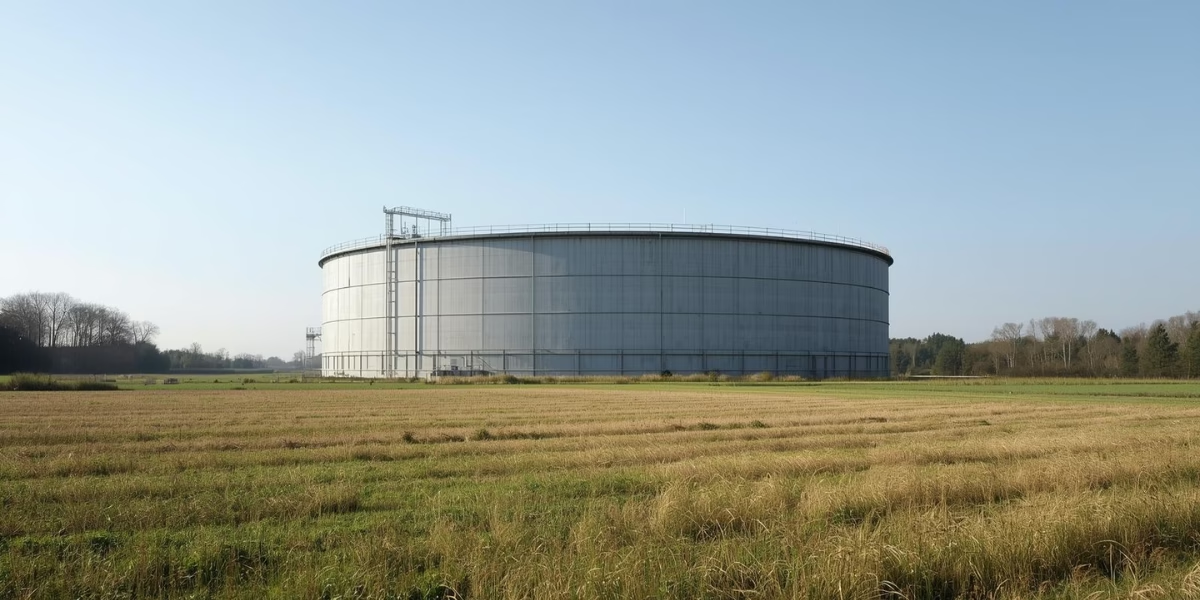
In aggressive environments, materials are pushed to their limits. Chemicals attack surfaces, saltwater accelerates corrosion. Heat and moisture add constant stress. Because of this, manufacturers need a material that performs without compromise. Vinyl Ester Resin has become that trusted solution.
Across chemical processing plants and marine structures, Vinyl Ester Resin is widely used. It offers a rare balance of strength, resistance, and reliability. More importantly, it performs where other resins often fail.
So, why is Vinyl Ester Resin the preferred choice? Let’s explore.
What Makes Vinyl Ester Resin Different?
Vinyl Ester Resin combines the best properties of epoxy and polyester systems. As a result, it delivers high mechanical strength with excellent chemical resistance.
Unlike traditional polyester resins, Vinyl Ester Resin has a molecular structure that resists cracking. Therefore, it can handle repeated stress and harsh exposure. At the same time, it is easier to process than pure epoxy. This balance makes it highly versatile. Because of these advantages, Vinyl Ester Resin is trusted in demanding applications.
Vinyl Ester Resin in Chemical Applications
Chemical environments are unforgiving. Acids, alkalis, solvents, and heat constantly attack materials. However, Vinyl Ester Resin performs exceptionally well under these conditions.
- First, it offers superior corrosion resistance. Chemical tanks, pipes, and scrubbers made with Vinyl Ester Resin last longer. As a result, maintenance costs are reduced.
- Second, Vinyl Ester Resin resists chemical permeation. This means fewer leaks and safer operations. In many systems, failures are minimized because the resin structure remains stable.
- Additionally, thermal resistance is improved. While many resins degrade under heat, Vinyl Ester Resin maintains its properties. Therefore, it is widely used in chemical storage and processing equipment.
Vinyl Ester Resin in Marine Applications
Marine environments are equally challenging. Saltwater, UV exposure, and constant moisture can destroy materials quickly. Yet, Vinyl Ester Resin continues to perform.
- One key benefit is excellent water resistance. Boats, ships, and offshore structures rely on Vinyl Ester Resin to prevent osmotic blistering. This problem is commonly seen with lower-grade resins.
- Moreover, Vinyl Ester Resin offers strong fatigue resistance. Hulls and decks experience continuous movement. Over time, stress builds up. However, cracks are reduced when Vinyl Ester Resin is used.
- UV stability also plays a role. While no resin is completely immune, Vinyl Ester Resin shows better long-term durability when properly formulated. Because of this, marine structures stay stronger for longer periods.
Vinyl Ester Resin Provides Strength Without Excess Weight
Weight matters in both chemical and marine industries. Heavy structures increase costs and reduce efficiency. Fortunately, Vinyl Ester Resin delivers high strength without adding unnecessary weight.
Composite structures made with Vinyl Ester Resin are lighter than metal alternatives. At the same time, strength is not compromised. Therefore, designers gain flexibility without sacrificing safety.
This advantage is especially important in marine vessels, where weight affects speed and fuel consumption.
Improved Adhesion and Structural Integrity
Another reason Vinyl Ester Resin stands out is its strong adhesion to fibers. Whether used with glass fiber, carbon fiber, or other reinforcements, bonding remains reliable.
Because of this, composite parts maintain structural integrity over time. Delamination risks are reduced. Consequently, service life is extended.
In chemical plants, this reliability is critical. Any failure can lead to downtime or safety issues. Vinyl Ester Resin helps prevent such risks.
Vinyl Ester Resin Is Cost-Effective Over the Long Term
At first glance, Vinyl Ester Resin may appear more expensive than basic polyester resins. However, the long-term value tells a different story.
Because durability is higher, replacement cycles are longer. Maintenance is reduced. Downtime is minimized. As a result, overall lifecycle costs are lower.
For industries that prioritize safety and performance, Vinyl Ester Resin proves to be a smart investment.
Compliance and Industry Trust
Over the years, Vinyl Ester Resin has gained strong acceptance across global industries. Many standards and specifications recommend its use for corrosive and marine environments.
This trust did not happen overnight. It was earned through consistent performance and proven results. Therefore, engineers and manufacturers continue to rely on Vinyl Ester Resin for critical applications.
Concluding Thoughts
In summary, Vinyl Ester Resin offers a powerful combination of properties. It resists chemicals. It withstands marine exposure. It provides strength, durability, and reliability.
Because of these benefits, it has become the go-to choice for chemical and marine applications worldwide. When performance matters most, Vinyl Ester Resin delivers. And as industries continue to demand longer service life and better safety, Vinyl Ester Resin will remain a key material of choice.
COMPANY INFO
Website: www.crestresins.com
Phone: +91 9879233188
Email: enquiry@crestresins.com
Address: 605/A, 6th Floor, Tower D, Times Square Grand Office, Sindhubhavan Marg, Near Taj Hotel, Ahmedabad, Gujarat - 380059
