
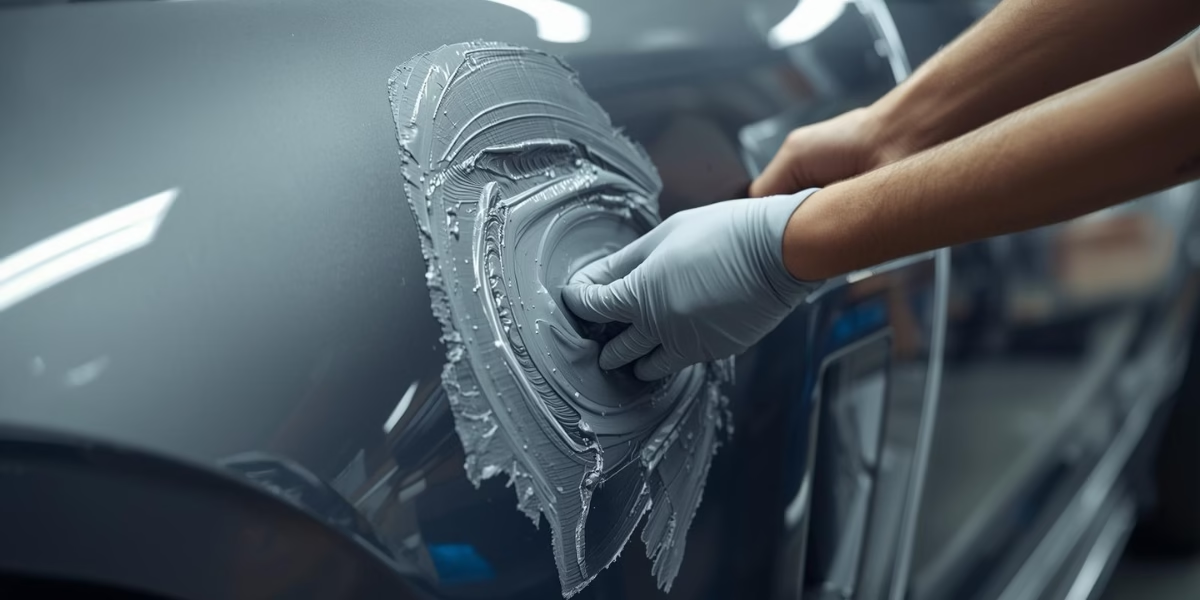
Vehicle repairs depend on more than skill alone. The materials used play a critical role. When surface correction is required, the choice often comes down to Automotive Putty Resin or standard body fillers. Although both serve similar purposes, their performance is very different.
Understanding these differences helps achieve better finishes, longer durability, and fewer rework issues. Therefore, selecting the right resin is essential.
Why Material Selection Impacts Repair Quality?
Body repair materials are exposed to vibration, temperature changes, and mechanical stress. Over time, weak materials crack, shrink, or detach. As a result, paint finishes fail early.
Because of this, professional workshops prefer materials that bond well and remain stable. Automotive Putty Resin is designed specifically to meet these demands. Standard body fillers, however, are often used where performance expectations are lower. The right choice improves both appearance and longevity.
Understanding Automotive Putty Resin
Automotive Putty Resin is a specialized resin system formulated for vehicle surface correction. It offers smooth application and strong adhesion to metal substrates.
Because the resin structure is refined, it cures evenly. Shrinkage is minimized. Surface leveling becomes easier. As a result, finishing time is reduced. In many cases, Automotive Putty Resin is preferred for premium repairs and refinishing work.
What Defines Standard Body Fillers?
Standard body fillers are typically polyester-based compounds. They are widely used due to low cost and easy availability. For basic dent filling, they can be effective.
However, these fillers often contain higher filler content. Because of this, flexibility is limited. Over time, cracking may occur. Moisture resistance is also lower. Therefore, standard body fillers are generally used for non-critical repairs.
Automotive Putty Resin vs Standard Body Fillers: Key Differences
Adhesion Strength Comparison of Automotive Putty Resin Vs. Standard Body Fillers
Automotive Putty Resin bonds strongly to metal and primed surfaces. This reduces the risk of peeling. In contrast, standard body fillers may lose adhesion under vibration.
Shrinkage Control
Shrinkage is reduced in Automotive Putty Resin. As a result, surface profiles remain stable after curing. Standard body fillers may shrink over time, affecting paint finish.
Workability and Finish
Automotive Putty Resin spreads smoothly. Sanding becomes easier. Therefore, surface refinement is faster. Standard fillers may feel grainy and require more effort.
Durability Under Stress
Vehicles experience continuous movement. Automotive Putty Resin absorbs stress better. Cracks are reduced. Standard fillers may fail under repeated vibration.
Application Areas That Demand Automotive Putty Resin
High-quality refinishing jobs require consistency. Automotive Putty Resin is commonly used for:
- Panel leveling
- Scratch correction
- Surface smoothing before painting
- Premium automotive refinishing
When Standard Body Fillers Make Sense?
Despite limitations, standard body fillers still have practical use. For example, they are suitable for:
- Minor cosmetic repairs
- Low-cost vehicle restoration
- Non-structural filling work
In these cases, performance demands are lower. Therefore, standard fillers can be acceptable.
Cost vs Performance: The Real Comparison Between Automotive Putty Resin & Standard Body Fillers
Standard body fillers are less expensive upfront. However, rework and early failure increase long-term costs. Automotive Putty Resin may cost more initially, but durability offsets the difference.
As a result, workshops focused on quality often choose Automotive Putty Resin. It reduces callbacks. Customer satisfaction improves.
Environmental and Finish Stability Considerations
Temperature changes affect repair materials. Automotive Putty Resin maintains stability across varying conditions. Expansion and contraction remain controlled.
Standard body fillers may respond poorly to heat and moisture. Over time, surface defects can appear. Because of this, finish integrity suffers.
Making the Right Choice for Long-Term Results
Choosing between Automotive Putty Resin and standard body fillers depends on repair goals. For long-lasting performance and smooth finishes, Automotive Putty Resin remains the better choice.
Standard fillers may serve short-term or low-cost needs. However, they are not ideal for high-quality automotive refinishing.
Final Thoughts
Automotive Putty Resin offers superior adhesion, reduced shrinkage, and better durability compared to standard body fillers. It supports cleaner finishes and longer service life.
When repair quality matters, selecting the right resin makes all the difference. Automotive Putty Resin delivers performance that meets modern automotive expectations.
COMPANY INFO
Website: www.crestresins.com
Phone: +91 9879233188
Email: enquiry@crestresins.com
Address: 605/A, 6th Floor, Tower D, Times Square Grand Office, Sindhubhavan Marg, Near Taj Hotel, Ahmedabad, Gujarat - 380059
