
Why is Vinyl Ester Resin essential for demanding industrial applications? Discover how it delivers corrosion resistance, chemical protection and long-term durability across industries.
Industrial equipment faces constant challenges. Chemicals, moisture, high temperatures and harsh operating conditions can damage surfaces and weaken structures. Over time, this damage can affect safety, performance and operating costs.
However, the right material can make a major difference. Vinyl Ester Resin provides a strong layer of protection for industrial applications. It combines excellent corrosion resistance with mechanical strength and durability. Although it often remains hidden beneath the surface, its role is vital in protecting industrial assets.
Why Does Vinyl Ester Resin Matter in Industrial Protection?
Metal and conventional materials can struggle in aggressive environments. Chemical exposure, moisture and corrosive substances may lead to surface damage and structural deterioration.
This is where Vinyl Ester Resin offers an effective solution. Its chemical structure provides excellent resistance to many acids, alkalis and industrial chemicals. As a result, it is widely used in applications where corrosion protection is essential.
Moreover, it offers a useful balance of mechanical strength and chemical resistance. This makes it suitable for equipment that must perform under demanding conditions.
Why It Performs in Certain Manner?
The performance of Vinyl Ester Resin comes from its molecular structure. It combines features of epoxy chemistry with the processing benefits of unsaturated polyester resin.
Its cross-linked structure helps create a durable protective barrier. Once cured, the resin forms a strong network that helps resist chemical penetration and environmental damage.
Furthermore, different resin grades can be selected to meet specific application requirements. Factors such as chemical concentration, operating temperature and exposure time help determine the right formulation. Therefore, choosing the correct grade is important for achieving reliable performance.
Where Does Vinyl Ester Resin Make A Difference?
Vinyl Ester Resin supports several industries where corrosion resistance and durability are critical.
1. Chemical Processing Plants
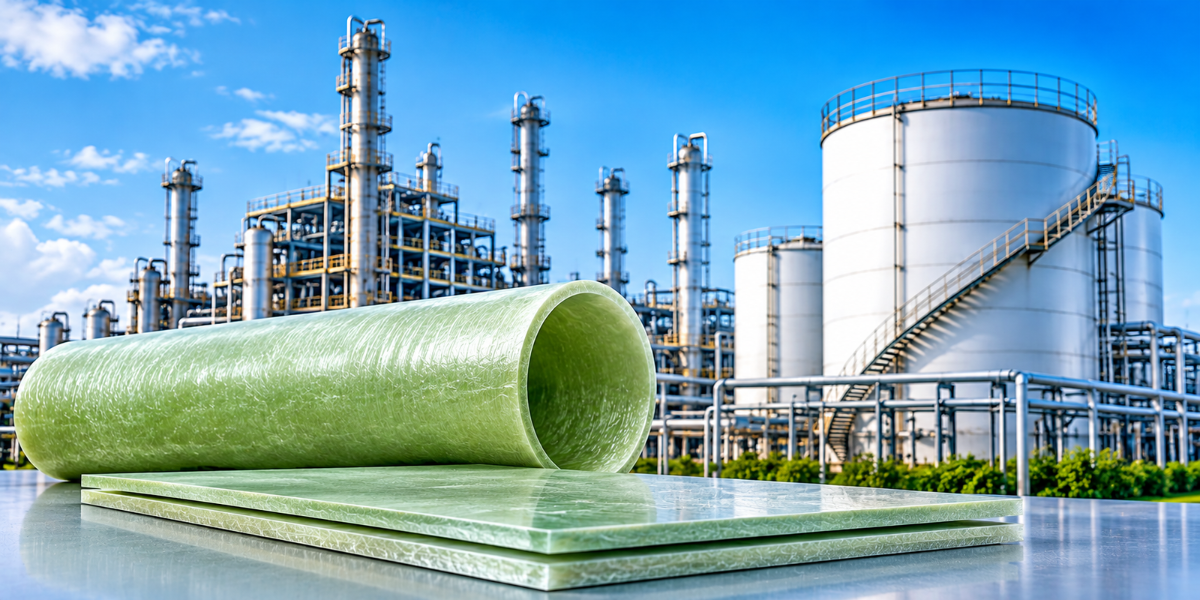
Chemical plants handle aggressive liquids and gases every day. Storage tanks, pipelines and process equipment need materials that can withstand chemical exposure. Vinyl Ester Resin is widely used in FRP tanks, pipes and scrubbers to provide corrosion protection.
2. Industrial Flooring and Protective Coatings
Industrial floors face chemical spills, moisture and regular wear. Vinyl Ester Resin-based systems can help protect concrete and other surfaces from chemical attack. Consequently, they support longer service life and easier maintenance.
3. Marine and Offshore Applications
Saltwater and humid conditions can accelerate corrosion. Therefore, marine structures require materials that can withstand continuous exposure to challenging environments. Vinyl Ester Resin is used in suitable FRP components and protective systems for marine applications.
4. Pollution Control Equipment
Scrubbers and pollution-control systems often handle corrosive gases and liquids. Vinyl Ester Resin-based FRP equipment helps provide the required resistance in these demanding environments.
5. Infrastructure and Industrial Composites
FRP rebar, chemical pipelines and industrial structures benefit from corrosion-resistant composite materials. Unlike conventional steel reinforcement, FRP rebar does not rust. As a result, it can support durable construction in suitable applications.
How Does Vinyl Ester Resin Support Long-Term Performance?
Industrial durability is not just about initial strength. It also depends on how well a material performs over time.
Vinyl Ester Resin offers several important advantages:
- Corrosion Resistance: Helps protect equipment from many aggressive chemicals.
- Mechanical Strength: Supports strong and durable composite structures.
- Chemical Stability: Performs well in many demanding chemical environments.
- Design Flexibility: Supports different FRP manufacturing processes.
- Long-Term Durability: Helps reduce corrosion-related maintenance when correctly specified and installed.
However, performance depends on resin grade, curing conditions, fabrication quality and the operating environment. Proper material selection is therefore essential.
Choosing the Right Vinyl Ester Resin for Your Application
Every industrial application has different requirements. A resin suitable for a chemical storage tank may not be the right choice for a scrubber or marine component.
Before selecting a resin, consider the chemicals involved, their concentration, operating temperature and expected service conditions. In addition, review the manufacturing process and required mechanical properties.
Technical guidance can help manufacturers identify the right resin system for their specific needs. This approach supports consistent quality, reliable performance and long-term value.
Conclusion:
Industrial strength depends on more than what we can see. Behind reliable tanks, pipes, scrubbers and composite structures, advanced materials play an important role.
Vinyl Ester Resin acts as an invisible shield against many industrial challenges. It helps protect equipment, supports durable structures and enables industries to operate in demanding environments.
At Crest Speciality Resins, technical expertise and application-focused resin solutions support manufacturers in developing high-performance composite products. Because when industrial conditions become tougher, the right chemistry makes all the difference.
COMPANY INFO
Website: www.crestresins.com
Phone: +91 9879233188
Email: enquiry@crestresins.com
Address: 605/A, 6th Floor, Tower D, Times Square Grand Office, Sindhubhavan Marg, Near Taj Hotel, Ahmedabad, Gujarat - 380059
