
Manufacturers today need materials that combine strength, durability, flexibility, and cost efficiency. Unsaturated polyester resin has become a popular choice because it offers a practical balance of these properties.
From FRP tanks and industrial pipes to automotive components and marine products, this resin supports a wide range of applications. Moreover, it can be combined with reinforcement materials such as fiberglass to create strong and lightweight composite products.
But what makes unsaturated polyester resin so versatile? Its adaptable formulation, easy processing, and wide application range are some of the key reasons.
What Is Unsaturated Polyester Resin?
Unsaturated polyester resin is a thermosetting polymer used extensively in composite manufacturing. It contains reactive unsaturated groups that allow the resin to cure and form a solid, cross-linked structure.
During manufacturing, the resin is often combined with glass fiber or other reinforcement materials. The resin binds the reinforcement together and helps transfer loads through the finished composite.
As a result, the final material can provide useful mechanical strength, corrosion resistance, dimensional stability, and durability.
Furthermore, resin formulations can be adjusted for different applications. Manufacturers can select suitable grades based on curing requirements, chemical resistance, mechanical performance, surface finish, and processing technique.
Unsaturated Polyester Resin in FRP Manufacturing
One of the most important applications of unsaturated polyester resin is Fiber Reinforced Plastic, or FRP.
In an FRP product, the reinforcement provides structural strength while the resin forms the surrounding matrix. Together, they create a composite material that can be shaped into many different products.
Therefore, unsaturated polyester resin is widely used for:
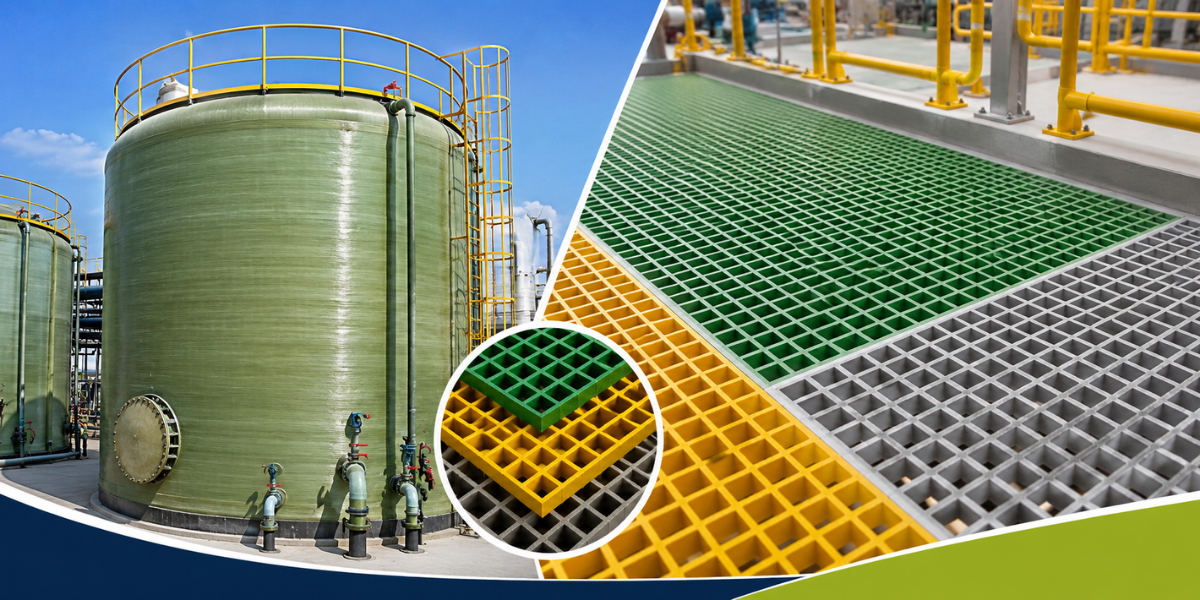
- FRP storage tanks
- Industrial pipes
- Wet scrubbers
- Ducting systems
- Roofing sheets
- FRP gratings
- Cooling tower components
- Chemical handling equipment
- Industrial panels
Because FRP products can offer corrosion resistance and relatively low weight, they are useful in industries where traditional materials may require more maintenance.
Unsaturated Polyester Resin for Automotive Applications
- The automotive industry is another major area where unsaturated polyester resin technology is valuable. Polyester-based materials are used in automotive putties, body repair products, molded composite parts, and various structural or semi-structural components.
- For example, automotive putty can be applied to damaged surfaces to fill dents and imperfections before sanding and painting. Meanwhile, fiberglass-reinforced polyester composites can be molded into complex shapes.
- Consequently, manufacturers and repair professionals can benefit from a material that combines practical processing with reliable performance.
Marine Applications of Unsaturated Polyester Resin
Marine products must deal with moisture, water exposure, and demanding operating conditions. For this reason, unsaturated polyester resin is widely used in fiberglass boats and other marine composite structures.
It can be used in applications such as:
- Boat hulls
- Decks
- Marine panels
- Small watercraft
- Structural components
- Fiberglass repairs
When properly formulated and processed, polyester-based composites can provide a durable solution for many marine applications.
UPR in Construction
Construction is another sector that benefits from the versatility of unsaturated polyester resin. It can be used to manufacture roofing sheets, translucent panels, pipes, sanitary products, architectural components, and other composite materials.
In addition, manufacturers can modify resin systems to meet specific production requirements. This flexibility allows the same basic resin technology to support different products and manufacturing methods.
Why UPR Has Hundreds of Uses?
The versatility of unsaturated polyester resin comes from its ability to adapt to different production processes and end-use requirements.
Depending on the formulation and product design, it can be processed through methods such as hand lay-up, spray-up, filament winding, pultrusion, and other composite manufacturing techniques.
Moreover, manufacturers can develop resin grades with different curing speeds, viscosity levels, mechanical properties, and resistance characteristics.
This adaptability makes unsaturated polyester resin suitable for both simple molded products and more demanding industrial components.
Choosing the Right Unsaturated Polyester Resin
Selecting the correct resin is important because every application has different requirements.
Before choosing unsaturated polyester resin, manufacturers should consider:
- Mechanical strength
- Chemical resistance
- Corrosion resistance
- Curing speed
- Processing method
- Operating temperature
- Surface finish
- Reinforcement system
- Expected service conditions
For example, a resin designed for general FRP products may not be the best choice for a highly corrosive chemical environment. Therefore, technical requirements should always guide resin selection.
The Future of UPR
- Composite manufacturing continues to evolve as industries search for lightweight, durable, and cost-effective materials. At the same time, resin manufacturers are working toward improved processing, better performance, reduced emissions, and more efficient production.
- As these technologies develop, unsaturated polyester resin is expected to remain an important material for composite manufacturing.
- Its application potential can continue to expand across industrial equipment, transportation, construction, infrastructure, renewable energy, and consumer products.
Concluding Thoughts
Unsaturated polyester resin is much more than a basic polymer. It is a versatile technology that supports hundreds of products across different industries.
From an FRP tank protecting chemicals to a fiberglass boat crossing the water or automotive putty restoring a damaged body panel, the material plays an important role in modern manufacturing.
Ultimately, its combination of versatility, processability, performance, and cost efficiency explains why unsaturated polyester resin remains one of the most widely used resin technologies in the composite industry.
COMPANY INFO
Website: www.crestresins.com
Phone: +91 9879233188
Email: enquiry@crestresins.com
Address: 605/A, 6th Floor, Tower D, Times Square Grand Office, Sindhubhavan Marg, Near Taj Hotel, Ahmedabad, Gujarat - 380059
