
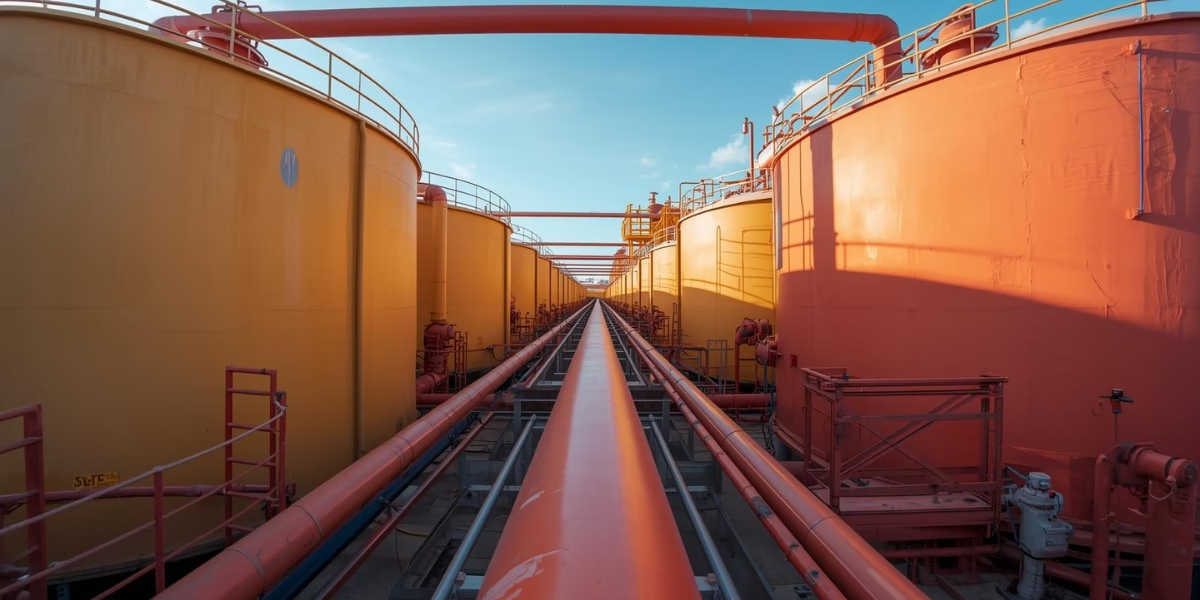
Discover why Vinyl Ester Resin offers the ideal balance between cost and performance. Learn how it compares to epoxy and why industries choose it for high-strength, corrosion-resistant applications.
Industries today need materials that offer strength, durability, and long-term protection. However, they also need solutions that remain affordable. This balance between cost and performance often leads engineers to compare Vinyl Ester Resin and epoxy resin. Both materials deliver strong mechanical and chemical properties. Yet, vinyl ester stands out as a cost-effective alternative without major performance sacrifices. This blog explains why Vinyl Ester Resin is becoming the smarter choice for many industries.
Understanding Vinyl Ester Resin
Vinyl Ester Resin is a high-performance material created by reacting epoxy resin with unsaturated monomers. This hybrid structure gives it a unique combination of strength, flexibility, and chemical resistance. It sits between polyester and epoxy in terms of performance. Because of this, it offers a balanced solution for composite manufacturing, corrosion-resistant products, and protective coatings.
In many applications, vinyl ester delivers nearly the same performance as epoxy but at a much lower cost. Therefore, it has become one of the most reliable alternatives for industries focused on efficiency.
Why Compare Vinyl Ester Resin and Epoxy?
Epoxy resin is known for its superior strength, adhesion, and fatigue resistance. However, it is also expensive and can be difficult to process. Vinyl ester resin, on the other hand, offers impressive strength and corrosion resistance at a more affordable price. For several applications, the performance difference between the two materials is minimal. Yet the cost savings are significant. Consequently, industries are shifting toward vinyl ester as a strategic alternative.
Key Advantages of Vinyl Ester Resin Over Epoxy
Although both materials are strong, vinyl ester offers unique advantages that make it a practical choice in many environments.
Lower Cost with High Performance
The biggest advantage of Vinyl Ester Resin is its cost efficiency. Epoxy resins are typically much more expensive due to their complex chemistry. Vinyl ester provides comparable performance in many applications at a reduced price. This makes it ideal for large-scale projects where cost control is important.
Vinyl Ester Resin Offers Excellent Chemical Resistance
Vinyl ester resins perform extremely well in harsh conditions. They resist acids, alkalis, solvents, and corrosive environments. While epoxy also offers chemical resistance, vinyl ester often performs better in environments involving continuous immersion in chemicals. This is why industries choose vinyl ester for tanks, pipes, and marine applications.
Composites Are Created with Low Cracking Tendencies
Epoxy is strong but can be brittle under certain conditions. Vinyl ester resins offer better flexibility and elongation. This reduces the risk of cracking, especially in environments with vibrations or sudden impact. Therefore, vinyl ester composite structures last longer and perform better under mechanical stress.
Vinyl Ester Resin Performs Well in Wide Range of Temperature
Vinyl ester resin maintains stability under temperature fluctuations. Although epoxy handles extreme heat well, vinyl ester performs reliably in a wider range of environments. It also resists fatigue, making it suitable for continuous operation or repeated stress.
Strong Bonding with Fibers
Vinyl ester resin bonds well with reinforcements such as fiberglass and carbon fiber. This enhances structural strength. While epoxy provides excellent bonding, vinyl ester’s performance remains strong enough for most industrial requirements, with a significantly lower cost.
Places Where Vinyl Ester Resin Outperforms Epoxy
Several industries prefer Vinyl Ester Resin because it offers the right combination of durability and affordability.
Vinyl Ester Resin in Corrosion-Resistant Tanks and Vessels
Chemical tanks, storage vessels, and process equipment are often exposed to harsh chemicals. Vinyl ester resin handles these conditions well. It resists chemical attack, prevents cracking, and offers long-term durability.
Marine and Offshore Applications
Saltwater exposure can damage many materials. Vinyl ester resin provides superior water resistance and toughness. Therefore, it is ideal for marine structures, boat components, and offshore equipment.
FRP Pipes and Ducting
FRP pipes made with vinyl ester resin are lightweight, strong, and corrosion resistant. They carry chemicals, gases, and industrial fluids safely. They also outlast metal pipes in corrosive environments.
Vinyl Ester Resin in Industrial Flooring and Coatings
Vinyl ester coatings create durable, chemical-resistant floors. They are used in factories, processing plants, and wastewater facilities. The fast-curing nature of the resin reduces downtime and speeds up installation.
Composite Manufacturing
From wind turbine blades to automotive components, vinyl ester resin delivers strength and flexibility. Because it is easier to process, manufacturers prefer it for high-performance composite structures.
Epoxy Is Still the Better Choice for the Following Applications
Although vinyl ester resin offers several advantages, epoxy remains the best choice for:
- Aerospace-grade composites
- High-temperature environments
- Applications requiring maximum bonding strength
- Advanced electrical insulation
Yet, for most industrial uses, vinyl ester provides more than enough performance at a much lower cost.
Final Thoughts
Vinyl Ester Resin has proven that high performance does not always require high cost. It offers excellent durability, flexibility, chemical resistance, and fast curing, making it a smart alternative to epoxy for many industries. As businesses look for reliable and economical solutions, vinyl ester stands out as a material that balances quality with affordability.
COMPANY INFO
Website: www.crestresins.com
Phone: +91 9879233188
Email: enquiry@crestresins.com
Address: 605/A, 6th Floor, Tower D, Times Square Grand Office, Sindhubhavan Marg, Near Taj Hotel, Ahmedabad, Gujarat - 380059
