
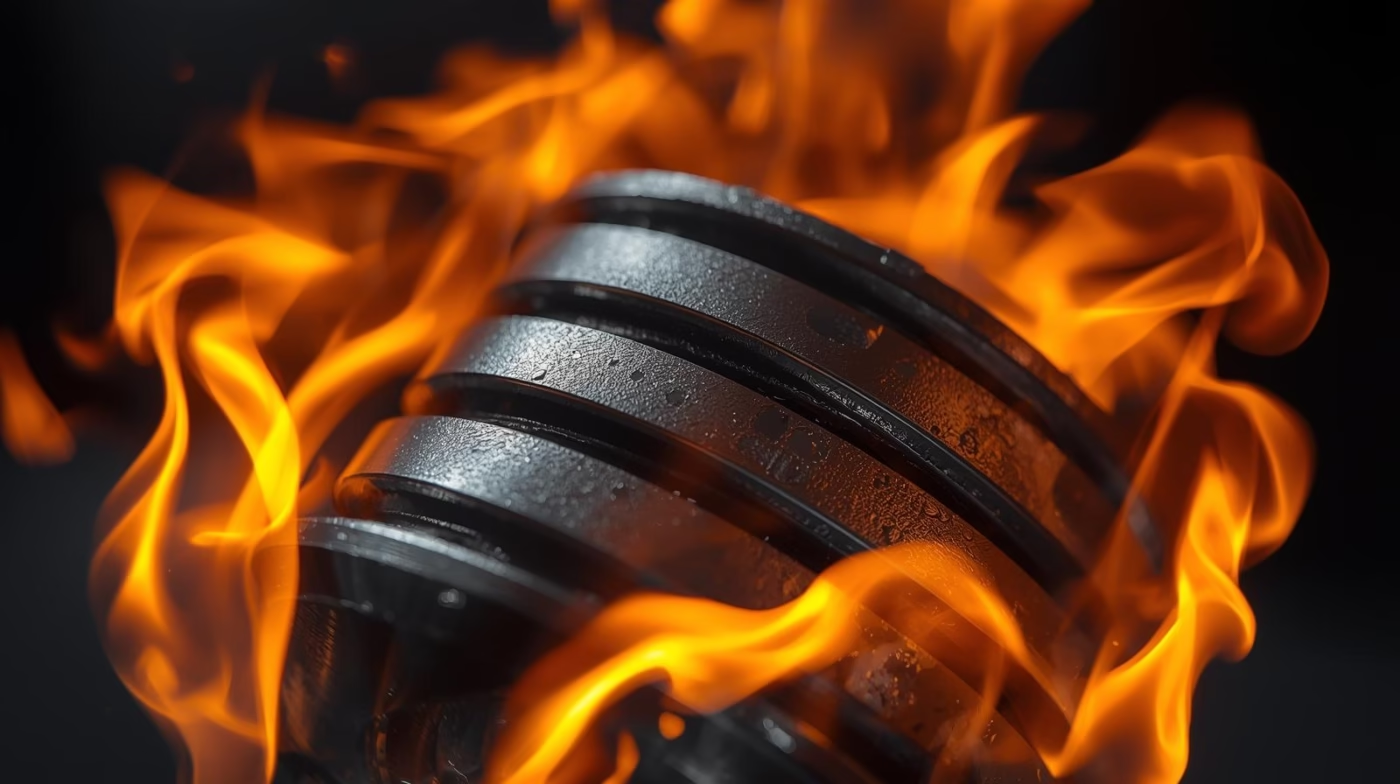
Explore how fire retardant resins enhance composite materials without sacrificing performance. Learn how safety, strength, and durability work together.
Composite materials are everywhere. They appear in buildings, transport systems, electrical equipment, and industrial structures. Their lightweight nature and strength make them ideal. However, fire safety remains a critical concern.
This challenge is addressed by fire retardant resins. These advanced resin systems help composites slow fire spread. At the same time, performance remains intact. Therefore, safety and efficiency progress together.
What Makes Fire Retardant Resins Essential?
Standard resins can ignite when exposed to high heat. In enclosed or high-occupancy areas, this risk is unacceptable. These resins are engineered to modify fire behavior.
They reduce flame propagation, heat release is controlled, smoke development is minimized. As a result, composite structures gain valuable time during fire incidents, improving overall safety outcomes.
How Fire Retardant Resins Respond to Heat?
The effectiveness of fire retardant resins lies in their intelligent response to fire. When exposed to heat, a protective char layer is formed. This layer acts as a thermal barrier. Consequently, combustion slows down. In some systems, fire-inhibiting gases are released, further suppressing flames.
Because of these mechanisms, damage is limited and structural collapse is delayed. This balance is essential in critical applications where failure is not an option.
Fire Retardant Resins Offer Process Compatibility Without Compromise
One major advantage of modern fire retardant resins is their compatibility with composite manufacturing processes. Design flexibility is preserved, even with added fire protection.
Applications of Fire Retardant Resins
Fire retardant resins are widely used in applications that demand strict fire performance, including:
- Interior and exterior building panels
- Electrical and electronic housings
- Public transport interiors
- Industrial equipment enclosures
- Infrastructure components
In each case, fire safety compliance is non-negotiable.
Compliance with Fire Regulations
Global fire standards continue to evolve. These resins help composite materials meet requirements related to flame spread, heat release, and smoke density.
Because different regions follow different regulations, resin systems can be customized. This adaptability ensures compliance without redesigning entire structures.
Fire Retardant Resins Offer Sustainability Through Safer Materials
Sustainability is closely linked to lifespan and safety. Materials that resist fire damage last longer. Resource consumption decreases.
Many modern fire retardant resins also focus on low-toxicity and halogen-free systems. This reduces environmental impact while maintaining performance.
Looking Ahead: Smarter Fire-Safe Composites
Material innovation continues to advance. New resin chemistries are improving fire resistance while maintaining strength and process efficiency. As safety expectations rise across industries, fire retardant resins will remain a key driver of composite innovation.
Concluding Thoughts
Fire safety should never come at the cost of performance. Fire retardant resins prove that both can coexist. By controlling fire behaviour, they enable composite materials that are strong, reliable, and safer. In modern design, fire retardant resins are not optional they are essential to building resilient and responsible composite solutions.
COMPANY INFO
Website: www.crestresins.com
Phone: +91 9879233188
Email: enquiry@crestresins.com
Address: 605/A, 6th Floor, Tower D, Times Square Grand Office, Sindhubhavan Marg, Near Taj Hotel, Ahmedabad, Gujarat - 380059
